- Home
- Brain Games
- Free Online Brain Games
- Free Concentration Games
Free Concentration Games: Train Focus & Reflexes
Concentration games are the fast-twitch athletes of brain training. While board games reward patient strategy and card games train memory, these games train the brain's speed: how quickly you can spot a target, react to a change, or track multiple objects at once. Pick one and play; no login needed. For all game categories, see the full games directory.
Note: If the games won't open, please: 1) turn off Adblock for this site, or 2) try with a different browser.


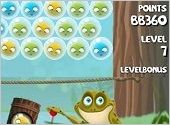
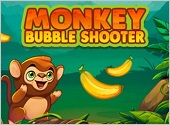
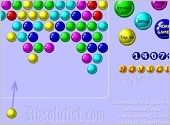
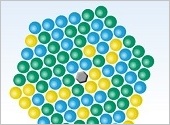



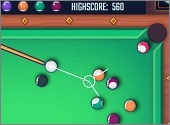
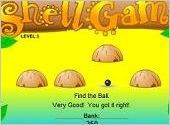


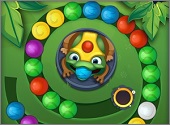
What These Games Actually Train
The concentration games here share a common thread: they all require you to process visual information quickly and respond accurately under time pressure. This is a genuinely different cognitive workout from strategy or logic games.
Here's why that matters. Your brain has a finite processing budget for attention. You can direct it narrowly (focus on one thing intensely) or broadly (monitor many things at once), but you can't fully do both simultaneously. Concentration games force your brain to get more efficient at this tradeoff. In a bubble shooter, you're aiming at one target while scanning the whole field for the best shot. In a breakout game, you're tracking the ball's trajectory while anticipating where it will bounce next. In a typing game, you're reading ahead while your fingers execute the current word.
A 2016 meta-analysis of 20 intervention studies found that training with fast-paced games produced moderate improvements in processing speed and attention, visuospatial ability, and executive function in healthy adults.[1] Notably, older adults also showed measurable benefits across all four cognitive domains tested, including processing speed, visuospatial ability, executive function, and memory.
What makes this finding particularly interesting is that the cognitive benefits transferred to tasks unrelated to the games themselves. Participants didn't just get better at the games; they got faster and more accurate on separate cognitive tests. Researchers have proposed that fast-paced games improve a general ability to extract useful information from complex, rapidly changing environments, a skill that transfers broadly to everyday tasks.[2]
It's the Features, Not the Label
A common question: do "casual" games like bubble shooters and breakout really provide the same cognitive benefits as more complex video games? A 2023 meta-analysis of 63 video game training studies found something surprising. The genre label ("action," "strategy," or "casual") did not reliably predict which games produced cognitive benefits. What mattered were the specific gameplay features: time pressure, tracking multiple objects, and rapid decision-making under uncertainty.[3]
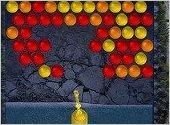
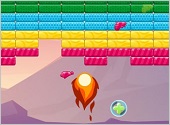
That's good news for the games in this collection. A bubble shooter involves time pressure, aiming precision, and pattern recognition. Breakout requires continuous visual tracking and rapid motor responses. Pinball demands divided attention (tracking the ball while planning the next flipper hit). These games may look simpler than a first-person shooter, but they share the core gameplay features that research links to cognitive benefits.
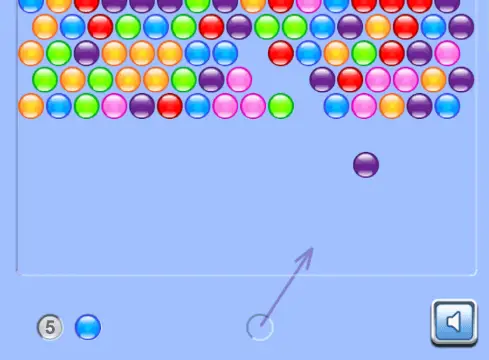
Concentration games train processing speed and visual attention
Choosing a Game by Skill
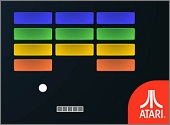
Visual tracking and reaction time. The breakout and brickout games are classic reaction-time trainers. You're tracking a moving object, predicting its trajectory, and timing your response. Pinball adds the complexity of a less predictable environment, with multiple targets and unpredictable ball physics. These are good starting points if you want to work on basic reaction speed.
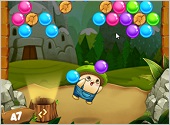
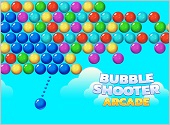
Aim and pattern matching. The bubble shooter games combine targeting accuracy with pattern recognition. You're not just aiming; you're scanning the field for color clusters, calculating which shot will trigger the largest chain reaction, and adjusting as the field changes. This blend of precision and planning makes bubble shooters surprisingly cognitively rich.
Selective attention and visual search. Hidden object games train the ability to find specific targets in a cluttered visual field. This is selective attention in its purest form: filtering relevant information from irrelevant noise. It's the same skill you use when scanning a crowded parking lot for your car or finding a specific item on a grocery shelf.
Processing speed and accuracy. Typing games create direct, measurable pressure on processing speed. You see a word, decode it, and execute the motor sequence, all under time pressure. The feedback is immediate and precise, which makes typing games one of the most efficient ways to train speed-accuracy coordination.
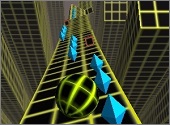
Sustained attention and avoidance. Navigation games like Cube Field and Color Tunnel require you to maintain focus over extended periods while making split-second adjustments. The challenge isn't any single decision; it's keeping your attention sharp for minutes at a time without a lapse. This trains sustained attention, sometimes called vigilance, which tends to decline with both age and fatigue.
Relaxed focus. Not every session needs to push your limits. Some of the simpler bubble games and matching games offer a lighter cognitive workout while still keeping your visual attention engaged. These are good options when you want to stay mentally active without the intensity of fast-paced reflex games.
Getting More from Concentration Games
A few strategies can help you get the most from these games. First, try to improve rather than just play. Actively trying to beat your previous score or time is important. The research on cognitive benefits consistently shows that passive, unfocused play produces minimal gains; it's the active engagement and effort to improve that drives neuroplasticity.[2]
Second, balance speed games with the other categories on this site. Concentration games excel at training processing speed and attention, but they don't exercise the planning, memory, and strategic thinking that board games, card games, and puzzles provide. A well-rounded brain-training routine draws from multiple game types. For more on matching games to cognitive goals, see the Brain Games guide.
Third, keep sessions moderate. Research suggests that benefit per hour tends to diminish in very long sessions. Playing for 20 to 30 minutes with genuine focus is likely more productive than an hour of semi-attentive play.
Looking for a different kind of focus training? Card-matching games, sometimes called "Concentration" or "Memory" games (flip cards to find pairs), are in the Memory Games section. For deeper techniques on improving concentration in everyday life, see the dedicated guide.
More Free Brain Games
Looking for other types? The full games directory has 200+ games organized by category, including board games, card & tile games, puzzles, memory games, and word games. If you prefer pencil-and-paper challenges, check out the printable puzzles section.
Published: 10/04/2013
Last Updated: 02/13/2026
Content on this page adheres to my editorial standards. See the medical disclaimer regarding health-related information.
References & Research
I've reviewed these sources and selected them for their relevance to understanding how fast-paced games affect cognitive function. Here's what each contributes:
1. Wang, P., Liu, H.-H., Zhu, X.-T., Meng, T., Li, H.-J., & Zuo, X.-N. (2016). "Action Video Game Training for Healthy Adults: A Meta-Analytic Study." Frontiers in Psychology, 7, 907. Full text at PMC
Researcher's Note: This meta-analysis of 20 training studies (636 total participants) established that fast-paced game training produces moderate benefits in overall cognitive ability, with the strongest effects in processing speed/attention and visuospatial ability. What makes this paper particularly useful is that it analyzed young and older adults separately. Older adults showed meaningful improvements across all four cognitive domains tested (processing speed, visuospatial ability, executive function, and memory), although effect sizes were smaller than in younger adults. This supports the idea that concentration-style games can benefit people across the age spectrum.
2. Green, C. S., & Bavelier, D. (2012). "Learning, Attentional Control and Action Video Games." Current Biology, 22(6), R197-R206. Full text at PMC
Researcher's Note: Daphne Bavelier and C. Shawn Green are the leading researchers in this field, and this paper explains the mechanism behind why fast-paced games produce transferable cognitive benefits. Their key argument: these games don't just train specific skills (like "bubble-shooter aiming"). Instead, they improve a general ability to learn efficiently from complex, rapidly changing environments. This "learning to learn" explanation accounts for why game-trained participants perform better on completely unrelated cognitive tests. The paper also identifies the critical features that drive benefits: speed, high perceptual load, divided attention demands, and emphasis on peripheral vision processing.
3. Smith, E. T., & Basak, C. (2023). "A Game-Factors Approach to Cognitive Benefits from Video-Game Training: A Meta-Analysis." PLoS ONE, 18(8), e0285925. Full text at PMC
Researcher's Note: This is the most recent and methodologically sophisticated analysis of the field, covering 63 studies with 2,079 participants. Its most important contribution: when the researchers classified games by their actual gameplay features rather than genre labels, they found that features like time pressure and tracking multiple objects were better predictors of cognitive transfer than whether a game was classified as "action," "strategy," or "casual." This matters for the games on this page because it shows that simpler games with the right features (fast pace, visual tracking, rapid decisions) can provide genuine cognitive benefits, even if they don't fit the traditional "action video game" category studied in most earlier research.
Newest / Popular
Multiplayer
Board Games
Card & Tile
Concentration
Daily Games
Math / Memory
Puzzles
Time Mgmt
Word Games
- Retro Flash -
Also:
Bubble Pop
• Solitaire
• Tetris
Checkers
• Mahjong Tiles
•Typing
No sign-up or log-in needed. Just go to a game page and start playing! 

Sudoku, Kakuro, Word Searches, Crosswords, Slitherlink & more!
Hundreds of printable puzzles you can download, print, and solve with pencil and paper.

Hippocampus? Working memory? Spaced repetition?
Look up memory or brain terms in the A-Z glossary of definitions.