- Home
- Brain Games
- Free Online Brain Games
- Free Board Games
Free Board Games: Play Online Anytime
Board games are where strategy meets pattern recognition. Every game below exercises planning, decision-making, or both. Pick one and play; no login needed. For all game categories, see the full games directory.
Note: If the games won't open, please: 1) turn off Adblock for this site, or 2) try with a different browser.

What Makes Board Games Different
Most brain games test one skill at a time: a word search exercises vocabulary, a number puzzle trains logic. Board games are different because they require you to coordinate several cognitive abilities at once. A single move in chess involves visual scanning, pattern recognition, working memory (holding potential sequences in mind), and forward planning. That combination is closer to how your brain handles real-world decisions.
The defining feature of strategy board games is opponent modeling: you're not just solving a static puzzle, you're predicting what another player will do and adjusting your plan accordingly. This kind of flexible, adaptive thinking exercises the prefrontal cortex in ways that solo puzzles generally don't.
A 2016 meta-analysis by Burgoyne and colleagues examined the relationship between chess skill and cognitive ability across multiple studies. They found meaningful correlations with fluid reasoning, processing speed, and short-term memory.[1] A separate meta-analysis by Sala and Gobet found that chess instruction was associated with moderate improvements in cognitive ability and math performance, with effects increasing alongside the amount of practice.[2]
And it's not just chess. A 2019 systematic review examined 27 studies on board game interventions and found consistently positive effects on cognitive function, with effect sizes ranging from small to very large.[3] The reviewed studies covered chess, Go, and other traditional board games, and the authors noted that board games improve knowledge retention, enhance interpersonal interaction, and increase participant motivation.
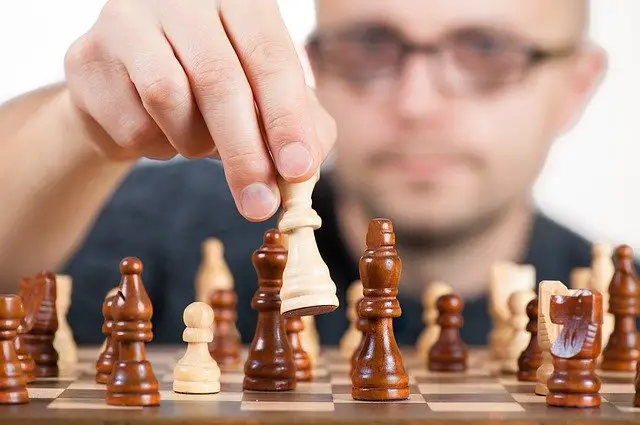
Board games exercise strategic thinking and planning
Choosing a Board Game by Skill
Multi-step planning. Chess is the gold standard. You're calculating sequences of moves while tracking threats across the entire board. If you're new to chess or want a low-pressure entry point, try Chess Casual. For a daily challenge, Chess Puzzle Daily presents one tactical problem per day. Checkers (there are five variants on this site) exercises similar planning skills with simpler rules, which makes it easier to pick up but still genuinely challenging at higher levels.
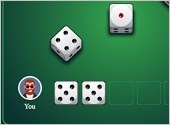
Probability and risk assessment. Backgammon blends strategy with probability. You plan your ideal sequence, then adjust in real-time when the dice don't cooperate. That combination of planning under uncertainty is something few other games offer. Yahtzee also trains probability thinking: knowing which dice to keep and which to re-roll is a constant expected-value calculation.
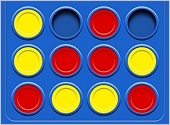
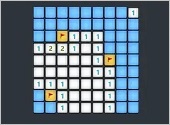
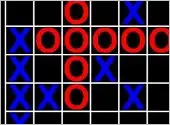
Spatial reasoning and pattern detection. Connect Four looks simple, but winning consistently requires spotting diagonal threats while building your own. Reversi (also called Othello) demands that you think about how placing a piece transforms the entire board. Minesweeper is pure logical deduction from spatial clues.
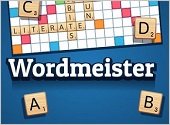
Vocabulary and word strategy. Scrabble Outspell and Scrabble Wordmeister combine word knowledge with board positioning. You're not just finding words; you're deciding where to place them for maximum points while blocking your opponent's options.
Logical deduction. Battleship trains systematic elimination. Instead of random guessing, experienced players develop search patterns and use each result to narrow the possibilities. Peg Solitaire requires working backward from the goal, a skill that transfers well to many real-world planning tasks.
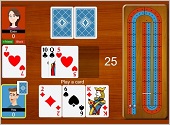
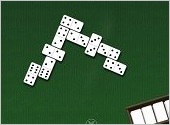
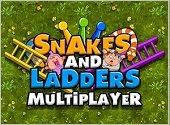
Relaxed play. Not every session needs to be intense. Snakes & Ladders, Dominoes, and Tic Tac Toe offer lighter play that still keeps your brain active. Rummikub blends pattern matching with number manipulation at a comfortable pace. Cribbage combines card play with mental arithmetic.
Getting More from Board Games
One pattern the research consistently shows is that cognitive benefits are tied to active engagement, not passive play. Simply going through the motions won't help much. Studies suggest that at least 25 to 30 hours of practice (roughly one session per week for six months to a year) may be needed before measurable cognitive effects appear.[2] The good news is that playing a game you enjoy makes that threshold easy to reach.
Variety helps, too. Playing only chess strengthens chess-related skills, but alternating between different board game types means you're exercising a broader range of cognitive abilities. Try pairing a deep strategy game (chess, Reversi) with something that emphasizes different skills (Scrabble for vocabulary, Yahtzee for probability). For more on how different game types train different skills, see the Brain Games guide.
More Free Brain Games
Looking for other types? The full games directory has 200+ games organized by category, including word games, puzzles, memory games, mahjong, and solitaire. If you prefer pencil-and-paper challenges, check out the printable puzzles section.
Published: 10/04/2013
Last Updated: 02/12/2026
Content on this page adheres to my editorial standards. See the medical disclaimer regarding health-related information.
References & Research
I've reviewed these sources and selected them for their relevance to understanding board games and cognition. Here's what each contributes:
1. Burgoyne, A. P., Sala, G., Gobet, F., et al. (2016). "The relationship between cognitive ability and chess skill: A comprehensive meta-analysis." Intelligence, 59, 72-83. Full text PDF (author's site)
Researcher's Note: This was the first comprehensive meta-analysis connecting chess skill to measured cognitive abilities. The key finding: chess correlated with fluid reasoning (r = 0.24), short-term memory (r = 0.25), and processing speed (r = 0.24). Importantly, the correlations were strongest in younger and less experienced players, suggesting that cognitive ability plays a larger role early in skill development. This supports the idea that board games can be especially beneficial as a training tool for those still building their skills.
2. Sala, G., Foley, J. P., & Gobet, F. (2017). "The Effects of Chess Instruction on Pupils' Cognitive and Academic Skills: State of the Art and Theoretical Challenges." Frontiers in Psychology, 8, 238. Full text at PMC
Researcher's Note: This paper reviews a meta-analysis of 24 studies (40 effect sizes) on chess instruction. The results showed a moderate positive effect on overall cognitive ability (d = 0.34) and math performance (d = 0.38), with effects growing alongside training duration. The authors estimate that 25 to 30 hours of practice is the minimum threshold for meaningful benefits. The paper is also honest about limitations: more rigorous experimental designs with active control groups are still needed to fully separate chess-specific effects from the benefits of any enrichment activity.
3. Noda, S., Shirotsuki, K., & Nakao, M. (2019). "The effectiveness of intervention with board games: a systematic review." BioPsychoSocial Medicine, 13, 22. Full text at PMC
Researcher's Note: This systematic review examined 27 board game intervention studies across cognitive functions, educational knowledge, and behavioral outcomes. Of the 11 studies focused on cognitive function, effect sizes ranged from 0.04 to 2.60, covering chess, Go, and other traditional games. The breadth of the review is its strength: it demonstrates that board game benefits extend beyond any single game type, supporting the idea that variety in game selection provides broader cognitive engagement.
Newest / Popular
Multiplayer
Board Games
Card & Tile
Concentration
Daily Games
Math / Memory
Puzzles
Time Mgmt
Word Games
- Retro Flash -
Also:
Bubble Pop
• Solitaire
• Tetris
Checkers
• Mahjong Tiles
•Typing
No sign-up or log-in needed. Just go to a game page and start playing! 

Sudoku, Kakuro, Word Searches, Crosswords, Slitherlink & more!
Hundreds of printable puzzles you can download, print, and solve with pencil and paper.

Hippocampus? Working memory? Spaced repetition?
Look up memory or brain terms in the A-Z glossary of definitions.