- Home
- Brain Games
- Free Online Brain Games
- Multiplayer Brain Games
Multiplayer Brain Games: Free Online Games vs. Friends & Opponents
Every solo brain game trains you to beat a puzzle. Multiplayer games add something fundamentally different: another mind working against you. When you play chess, backgammon, or even Guess Who against a real opponent, your brain has to do everything the game itself demands (planning, calculating, remembering) while simultaneously building a model of what the other person is thinking and adjusting your strategy accordingly.
University of Michigan researchers found that this kind of social-cognitive engagement produces measurable boosts in executive function, even after just 10 minutes of interaction. Choose one of the 20 multiplayer games below and play; no login needed. For all game categories, see the full games directory.
Note: If the games won't open, please: 1) turn off Adblock for this site, or 2) try with a different browser.






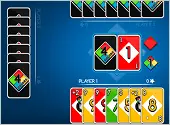
What Playing Against an Opponent Does to Your Brain
Solo games like solitaire or mahjong test your ability to solve a fixed problem. The board doesn't change its mind or try to outsmart you. Multiplayer games introduce an adversary, and that changes the cognitive equation in two important ways.
First, you need to engage in opponent modeling: inferring what the other player is thinking based on their moves, predicting what they'll do next, and adjusting your strategy in response. In chess, this might mean asking "why did they move that bishop?" and working backward to figure out their plan. In Guess Who, it means tracking which questions they've asked to narrow down what they already know. This is a form of theory of mind, the cognitive ability to represent another person's mental state, and it activates brain networks that solo games don't touch.
Second, multiplayer games create adaptive pressure. A puzzle has one correct solution path. An opponent who adjusts to your strategy forces you to keep adapting, which means you can't rely on memorized patterns or autopilot moves. This ongoing back-and-forth keeps the cognitive demand elevated throughout the game rather than fading as you learn the system.
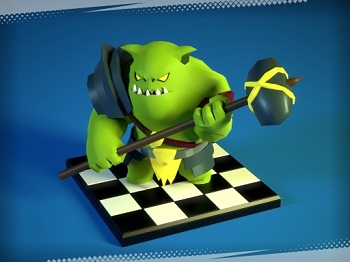
Multiplayer games add the challenge of reading your opponent.
How to Play: Three Modes
Most of the multiplayer games on this page are built by CodeThisLab and offer three ways to play. Against the computer: good for learning a game or practicing without pressure. Quick Match: play a random human opponent online, no setup needed. Private Room: set up a password-protected game room so you and a specific friend can play on separate computers. For step-by-step instructions on setting up a private room, see the multiplayer setup guide. A few games (Cribbage, Rummikub, and the strategy simulations) use different multiplayer systems.
Choosing a Game by Type
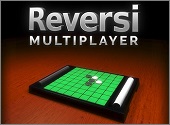
Strategy board games (Backgammon, Checkers Multiplayer, Checkers RPG, Chess, Connect Four, Reversi). These are the most cognitively demanding multiplayer games here. Each one requires you to plan several moves ahead while simultaneously anticipating your opponent's plan. Chess and Reversi are pure strategy (no randomness).
Backgammon blends strategy with dice rolls, which adds probability assessment to the planning challenge. Connect Four has simple rules but surprisingly deep look-ahead requirements. Checkers RPG plays similarly to standard Checkers Multiplayer but uses a different game engine.
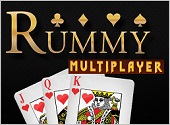
Card and tile games (Cribbage, Rummy, Rummikub, UNO). Card games combine hand management (deciding which cards to play, hold, or discard) with opponent reading (tracking what they pick up and discard to infer their strategy). Cribbage adds scoring arithmetic; Rummikub adds the spatial element of manipulating tile sets on the board. UNO is lighter strategically but still involves tracking the draw pile, timing special cards, and reading opponents' card counts.
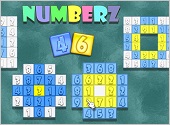
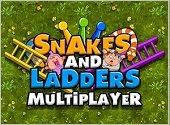
Quick-play and party games (Bubble Trouble, Darts, Guess Who, Hangman w/ Buddies, Numberz Addition, Snakes & Ladders, Tic Tac Toe). These games have simpler rules and faster rounds, making them good warm-up choices or options for casual play. Guess Who is the strongest brain workout in this group: it's essentially a logic puzzle where you narrow down possibilities through yes/no questions while your opponent does the same.
Darts tests precision and mental arithmetic. Hangman w/ Buddies is a word-deduction game. Bubble Trouble is a same-device co-op game (two players share one keyboard), which makes it the only cooperative multiplayer option here. Numberz Addition is a competitive math speed game.
Strategy simulations (Goodgame Big Farm, Goodgame Empire). These are persistent-world games where you build and manage resources over extended sessions. Unlike the turn-based games above, these involve long-term planning, resource optimization, and interaction with many other players simultaneously. They require a larger time commitment but offer a different kind of strategic thinking: managing competing priorities across multiple timescales rather than optimizing a single game board.
What the Research Shows
Researchers at the University of Michigan conducted a series of experiments testing how social interaction affects executive function (the cognitive abilities that control working memory, attention, and impulse inhibition). They found that as little as 10 minutes of social interaction that involved engaging with another person's mind, specifically trying to understand their perspective, produced short-term boosts in executive function comparable in size to the boosts from dedicated brain-training exercises.
The key mechanism: interacting with another person requires you to actively construct and update a mental model of their beliefs, expectations, and intentions, which exercises the same working memory and cognitive control processes measured on standard tests. Importantly, watching social content passively (like a video of people talking) did not produce the same benefit. The interaction needed to be active and engaged.[1]
A 20-year French population study (the Paquid cohort) followed over 3,675 older adults and found that those who regularly played board and card games had a 15% lower risk of developing dementia compared to non-players. The association held even after controlling for education, social activity, and physical activity. The researchers noted that the benefit appeared to work through two pathways: slower cognitive decline and fewer depressive symptoms.
While the study couldn't fully separate the cognitive and social components of game play, the fact that board and card games (which are typically played with others) showed this association is consistent with the idea that the social dimension adds something beyond the game's cognitive demands alone.[2]
A review of cognitive benefits of video games for older adults examined how different game genres map to different cognitive skills. The authors specifically hypothesized that multiplayer strategy games benefit supervisory abilities (executive control), working memory, and reasoning, and that the social interaction component may be an important factor in cognitive outcomes.
They noted that multiplayer games provide "increased intellectual challenges to players because of the additional complexities created by the participation of many other players whose actions affect game progress and challenges."[3]
Getting the Most from Multiplayer Games
Play against humans when you can. The computer opponent in these games follows predictable algorithms. Once you learn its patterns, the adaptive-pressure benefit fades. Human opponents are unpredictable, which keeps the opponent-modeling challenge fresh. Use Quick Match for a random opponent or set up a private room with a friend.
Match your skill level. Games that are too easy provide little cognitive challenge; games that are too hard are frustrating rather than stimulating. If you're new to strategy board games, start with Connect Four or Checkers rather than Chess. If you're an experienced chess player, the AI opponent will offer more challenge than Quick Match against beginners.
Think about why your opponent made that move. The opponent-modeling benefit only activates if you're actually trying to understand the other player's strategy, not just reacting to the board state. After each opponent move, pause and ask yourself: what are they trying to accomplish?
Combine with solo game types. Multiplayer games are strongest for training strategic reasoning and social cognition. For visual-spatial skills, try mahjong solitaire. For language, try word games. For focused attention, try concentration games. The Brain Games guide explains how different categories target different cognitive skills.
More Free Brain Games
Looking for other types? The full games directory has 200+ games organized by category, including board games, card & tile games, solitaire, puzzles, word games, math games, and typing games.
Published: 10/04/2013
Last Updated: 02/22/2026
Content on this page adheres to my editorial standards. See the medical disclaimer regarding health-related information.
References & Research
I've reviewed these sources and selected them for their relevance to understanding how multiplayer games, and social interaction more broadly, relate to cognitive function. Here's what each contributes:
1. Ybarra, O., & Winkielman, P. (2012). "On-line Social Interactions and Executive Functions." Frontiers in Human Neuroscience, 6, 75. Full text at PMC
Researcher's Note: This paper from the University of Michigan's Adaptive Social Cognition Lab directly addresses the question of why interacting with another mind benefits cognition. Ybarra and Winkielman review a series of experiments showing that brief social interactions (as short as 10 minutes) that require engaging with another person's perspective produce measurable boosts in executive function, specifically working memory and cognitive control. The boosts were comparable in size to those from intellectual activities like brain-training games. The critical finding: passive social exposure (watching a video of people talking) didn't work. The interaction had to be active, requiring participants to model the other person's mental state. This is directly relevant to multiplayer games, which inherently require this kind of opponent modeling. The paper also notes that competitive interactions can eliminate the benefit if they cause players to disengage from perspective-taking and focus only on themselves, suggesting that the most beneficial multiplayer games are those that keep you thinking about your opponent's strategy rather than just your own.
2. Dartigues, J. F., Foubert-Samier, A., Le Goff, M., Viltard, M., Amieva, H., Orgogozo, J. M., Barberger-Gateau, P., & Helmer, C. (2013). "Playing Board Games, Cognitive Decline and Dementia: A French Population-Based Cohort Study." BMJ Open, 3(8), e002998. Full text at PMC
Researcher's Note: The Paquid cohort is one of the longest-running population studies on games and dementia risk. Over 3,675 older French adults were followed for 20 years. Those who regularly played board and card games (inherently social activities) had a 15% lower risk of developing dementia. The researchers found that the benefit appeared to work through slower cognitive decline and fewer depressive symptoms. While this study can't completely separate the cognitive demands of the games from the social component of playing them with others, the 20-year duration and careful statistical controls make it one of the strongest pieces of evidence that regular game play, particularly social game play, is associated with better long-term cognitive outcomes. An important caveat: the study is observational, so we can't rule out that people with better cognitive health are simply more likely to keep playing games.
3. Zelinski, E. M., & Reyes, R. (2009). "Cognitive Benefits of Computer Games for Older Adults." Gerontechnology, 8(4), 220-235. Full text at PMC
Researcher's Note: This University of Southern California review maps different game genres to the cognitive abilities they're most likely to train. For multiplayer games specifically, the authors hypothesize that strategy games benefit supervisory skills (executive control) and working memory, while multiplayer online games add response speed, reasoning, and social-cognitive demands on top of these. The review draws on extended practice training principles from cognitive science to explain why games produce transferable benefits: they provide varied, escalating challenges that require active problem-solving, the same conditions that promote positive brain plasticity. This paper provides the theoretical framework for understanding why multiplayer strategy games, which combine the game's cognitive demands with the social demands of opponent interaction, may offer broader cognitive engagement than solo games.
Newest / Popular
Multiplayer
Board Games
Card & Tile
Concentration
Daily Games
Math / Memory
Puzzles
Time Mgmt
Word Games
- Retro Flash -
Also:
Bubble Pop
• Solitaire
• Tetris
Checkers
• Mahjong Tiles
•Typing
No sign-up or log-in needed. Just go to a game page and start playing! 

Sudoku, Kakuro, Word Searches, Crosswords, Slitherlink & more!
Hundreds of printable puzzles you can download, print, and solve with pencil and paper.

Hippocampus? Working memory? Spaced repetition?
Look up memory or brain terms in the A-Z glossary of definitions.