- Home
- Brain Games
- Free Online Brain Games
- Free Online Memory Games
Free Memory Games: Working Memory & Recall
Of all the game categories on this site, memory games connect most directly to the skills the rest of the site teaches. The techniques on the Memory Skills pages help you encode and retain information more effectively.
Memory games let you practice the underlying cognitive machinery: holding items in working memory, recognizing patterns you've seen before, and actively recalling information under pressure. Pick a game below and play; no login needed. For all game types, see the full games directory.
Note: If the games won't open, please: 1) turn off Adblock for this site, or 2) try with a different browser.






Two Types of Memory Games, Two Different Workouts
The memory games here fall into two fundamentally different categories, and the distinction matters if you want to train effectively.
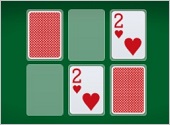
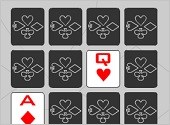
Recognition games are the classic "Concentration" or "Memory Match" format: cards are placed face-down, you flip two at a time, and try to remember where matching pairs are. When you flip a card and think "I've seen that before, it was in the upper left," that's recognition memory at work.
Your brain is comparing a current stimulus against stored representations. These games train visual-spatial working memory, the ability to hold a mental map of card locations while you search for matches.
Recall games ask you to actively produce information from memory. In a sequence game, you watch a pattern of lights or sounds and then reproduce it from scratch. In a trivia game, you retrieve a fact from long-term memory without any visual cue to trigger it.
This is harder than recognition, and research consistently shows that active recall strengthens memory traces more effectively than simply recognizing familiar items. That's the same principle behind the active recall techniques on this site.
Both types exercise working memory, the limited-capacity system your brain uses to hold and manipulate information in the moment. Working memory underpins virtually all complex cognitive tasks, from following a conversation to solving a math problem to remembering where you parked.[1]
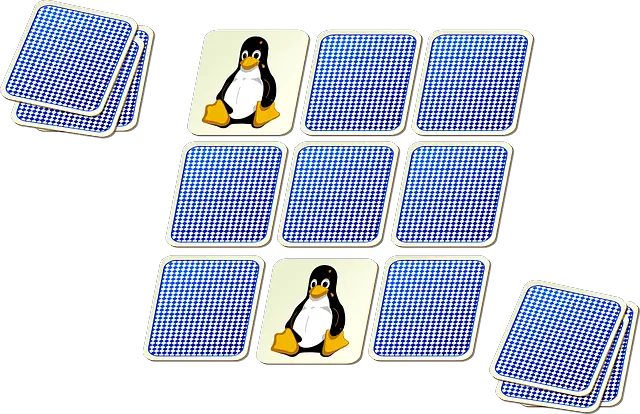
Memory games train short-term and working memory
What the Research Shows
Working memory has become one of the most actively studied areas in cognitive training research. A 2016 study trained older adults (average age 70) with 15 one-hour sessions of video games that included memory-intensive tasks.
The training group showed significant improvements in visuospatial working memory and episodic memory (memory for specific events and experiences) compared to a control group, and some gains were maintained at a three-month follow-up.[2]
The key finding from across this research: working memory training works best when it's adaptive, meaning the difficulty increases as you improve. That's exactly how most of the games here function. In a card-matching game, you can increase the grid size from 4x4 to 6x6 to 8x8.
In a sequence game, the patterns get longer. This progressive challenge is what pushes your working memory capacity, rather than just exercising at a comfortable level.
Researchers have also found that training with diverse stimuli (different images, patterns, and game formats) produces broader cognitive benefits than training with a single, narrow task. That finding argues for playing several different memory games rather than grinding one format exclusively.[1]
Choosing a Game by Skill
Visual-spatial working memory. The card-matching games (Concentration, Memory Match, Flipped Out, and the kids' memory games) are the purest workout for holding visual-spatial information in mind. You're building and updating a mental map of card locations as you play.
Start with smaller grids and work up. The challenge isn't just remembering individual cards; it's maintaining an accurate map of the entire grid while new information constantly overwrites the old.
Sequential working memory. Sequence and pattern games (such as Simon-style games) test how many items you can hold in working memory in the correct order. This is closer to everyday tasks like remembering a phone number long enough to dial it or following multi-step instructions. The difficulty scales by adding items to the sequence.
Long-term memory retrieval. Trivia and quiz games exercise a different memory system entirely. Instead of holding new information in mind briefly, you're searching long-term memory for stored facts and bringing them back to consciousness. Geography games, history quizzes, and general knowledge challenges all train this retrieval pathway.
Speed and memory combined. Some games, like Ice Cream Stand (remember and fill customer orders quickly), blend memory with time pressure. These are useful because they force you to encode and retrieve under stress, which trains the coordination between working memory and processing speed.
What Makes a Good Memory Training Routine
Three principles from the research can help you get the most from these games:
Increase the difficulty as you improve. The most consistent finding in working memory training research is that adaptive difficulty drives gains. If a 4x4 card grid is easy, move to 6x6. If a five-item sequence is comfortable, push to six. You should be succeeding about 70 to 80 percent of the time. If you're acing every round, the game isn't challenging your working memory enough to produce improvement.[1]
Vary the games. Play card matching one day, a sequence game the next, trivia another day. Research shows that training with a diversity of stimuli and task formats leads to broader transfer than repeating a single game. Each format exercises working memory in a slightly different way, and the variety prevents your brain from developing narrow, game-specific strategies instead of genuinely improving working memory capacity.[1]
Be consistent. Short, regular sessions beat occasional marathons. Studies that found lasting cognitive improvements typically used schedules of 15 to 60 minutes per session, several times per week, over multiple weeks.[2] Memory improvement is like physical fitness: the gains come from steady, repeated effort.
Training Memory Away from the Screen
Want to practice working memory without a computer? I've developed a set of working memory solitaire card games you can play with a standard deck of playing cards or Blink cards. Games like "Number, Color, Suit" train you to hold and update information in working memory while processing new cards, which is essentially the same cognitive task as the n-back exercises used in research studies. Keep a deck in your bag and practice during spare moments.
The Memory Skills section covers techniques like spaced repetition, active recall, and the Memory Palace that complement what these games train. The games strengthen the raw working memory capacity; the techniques teach you how to use that capacity more effectively.
More Free Brain Games
Looking for other types? The full games directory has 200+ games organized by category, including board games, card & tile games, concentration games, math games, puzzles, and word games. For pencil-and-paper challenges, see the printable puzzles. And for more on how brain games fit into a broader memory improvement strategy, visit the Brain Games guide.
Published: 10/04/2013
Last Updated: 02/22/2026
Content on this page adheres to my editorial standards. See the medical disclaimer regarding health-related information.
References & Research
I've reviewed these sources and selected them for their direct relevance to understanding how memory games affect cognitive function. Here's what each contributes:
1. Deveau, J., Jaeggi, S. M., Zordan, V., Phung, C., & Seitz, A. R. (2015). "How to Build Better Memory Training Games." Frontiers in Systems Neuroscience, 8, 243. Full text at PMC
Researcher's Note: This paper comes from a collaboration between Susanne Jaeggi (one of the leading working memory training researchers) and Aaron Seitz's perceptual learning lab at UC Riverside. Their central argument: effective memory training games need to combine three elements: (a) adaptive difficulty that scales with the player, (b) diverse stimuli to prevent narrow learning, and (c) engaging game design that motivates sustained practice. They also identify a critical problem with much existing working memory training: exercises that are too narrowly focused produce gains that don't transfer to real-world tasks. Their solution, integrating validated working memory tasks (like the n-back) into engaging game formats, directly supports the value of playing a variety of memory games rather than grinding a single format.
2. Toril, P., Reales, J. M., Mayas, J., & Ballesteros, S. (2016). "Video Game Training Enhances Visuospatial Working Memory and Episodic Memory in Older Adults." Frontiers in Human Neuroscience, 10, 206. Full text at PMC
Researcher's Note: This controlled study trained 19 older adults (average age around 70) with 15 one-hour sessions of memory-intensive video games, while 20 matched controls received no training. The training group improved significantly on the Corsi blocks task (visuospatial working memory), the Jigsaw puzzle task, and tests of both immediate and delayed visual memory (Faces I and II from the Wechsler Memory Scale). Most importantly, some improvements were maintained three months after training ended. This is one of the cleaner demonstrations that game-based training can improve specific memory functions in older adults, with gains that persist beyond the training period.
3. Smith, E. T., & Basak, C. (2023). "A Game-Factors Approach to Cognitive Benefits from Video-Game Training: A Meta-Analysis." PLoS ONE, 18(8), e0285925. Full text at PMC
Researcher's Note: This meta-analysis of 63 studies is relevant here because it separately analyzed memory outcomes alongside attention, higher-order cognition, and psychosocial measures. Their finding that specific gameplay features (rather than genre labels) predict cognitive benefits applies directly to memory games: a card-matching game with adaptive difficulty and diverse stimuli is likely to produce better memory outcomes than one with a fixed difficulty and repetitive imagery. This supports the recommendation to progress through increasing grid sizes and to vary the games you play.
Newest / Popular
Multiplayer
Board Games
Card & Tile
Concentration
Daily Games
Math / Memory
Puzzles
Time Mgmt
Word Games
- Retro Flash -
Also:
Bubble Pop
• Solitaire
• Tetris
Checkers
• Mahjong Tiles
•Typing
No sign-up or log-in needed. Just go to a game page and start playing! 

Sudoku, Kakuro, Word Searches, Crosswords, Slitherlink & more!
Hundreds of printable puzzles you can download, print, and solve with pencil and paper.

Hippocampus? Working memory? Spaced repetition?
Look up memory or brain terms in the A-Z glossary of definitions.