- Home
- Brain Games
- Free Online Brain Games
- Free Tetris Games Online
Free Tetris Games: Play Online
Tetris is probably the most studied video game in cognitive science, and for good reason. Every falling piece forces your brain to perform a rapid mental rotation (which orientation will it fit?), a spatial projection (where should it go?), and a time-pressured decision (can I get it there before it locks?) in a continuous loop that gets faster as you improve.
Brain imaging research shows that three months of regular Tetris practice physically thickens the cortex in areas associated with visuospatial processing, while simultaneously making those areas more efficient. Choose one of the eight versions below and play; no login needed. For all game categories, see the full games directory.
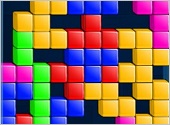

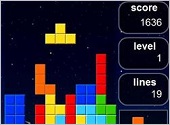
What Your Brain Does During Tetris
Tetris looks like a simple stacking game, but it demands three cognitive operations running in parallel, all under increasing time pressure.
The first is mental rotation. Each of the seven tetromino shapes (I, O, T, S, Z, L, J) can be placed in up to four orientations. Before a piece even reaches the bottom of the screen, you need to mentally rotate it to figure out which orientation will fit your current board layout. Mental rotation is one of the most well-studied components of spatial intelligence and activates regions of the frontal cortex, premotor cortex, and parietal cortex simultaneously.
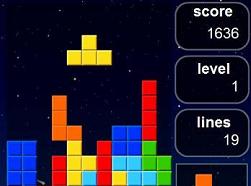
The second is spatial projection. You're not just rotating pieces in isolation; you're fitting them into a specific gap on the board. This means projecting a rotated shape downward into the existing stack and evaluating whether it will create a complete row, leave a gap, or block access to a hole beneath it.
Experienced players can do this projection almost instantly because they've developed strong visuospatial chunking, seeing common board patterns as single units rather than processing each cell individually.
The third is time-pressured decision-making. The piece is falling, and you have a limited window to rotate and position it before it locks in place. As the game speeds up through levels, the decision window shrinks, forcing you to make faster and less deliberate choices.
This escalating time pressure is why Tetris trains processing speed alongside spatial reasoning. You can't just be accurate; you have to be accurate fast.
What makes Tetris particularly interesting to researchers is that these three demands operate simultaneously and continuously. There's no pause between moves, no turn-based reflection. Each piece immediately follows the previous one, creating a sustained cognitive load that keeps all three systems engaged throughout the entire session.
The Games
All eight Tetris games on this page follow the same core mechanic: rotate and position falling tetrominoes to complete horizontal rows, which then clear from the board. The differences are in visual style, speed progression, and control feel.
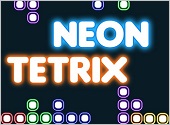
Tetris and Tetris Falling Blocks stick closest to classic rules and are good starting points. Neon Tetris and Tetris Trixology offer visual twists on the format.
Reckless Tetris and Super Tetris adjust the pacing. Tetris Falling Cubes uses a different visual style for the same core gameplay. Original Tetris runs via the Ruffle Flash emulator and requires a desktop or laptop computer.
If you've never played Tetris, the controls are straightforward: left and right arrow keys move the piece horizontally, up arrow rotates it, and down arrow drops it faster. The goal is to fill complete rows without leaving gaps. When you fill a row, it disappears and everything above it drops down. The game ends when the stack reaches the top of the screen.
What the Research Shows
Tetris is one of the few games with direct brain-imaging evidence of structural changes from practice. Researchers at the Mind Research Network used MRI to scan the brains of adolescent girls before and after three months of daily Tetris practice (30 minutes per day).
Compared to controls who did not play, the Tetris group showed increased cortical thickness in the left frontal and temporal regions (a sign of more gray matter) and decreased brain activation in frontal areas during gameplay (a sign of greater efficiency: the brain was doing the same work with less effort).
Interestingly, the areas that thickened were not the same areas that became more efficient, suggesting that practice affects brain structure and function through separate mechanisms.[1]
That 2009 study built on an earlier PET scan study by the same lead researcher. In the 1992 study, participants showed significantly increased brain glucose consumption when they first started playing Tetris (their brains were working hard to learn the task).
After four to eight weeks of regular practice, glucose consumption dropped back to baseline, even though performance had improved dramatically. The most skilled players showed the lowest glucose consumption during play. This "efficiency paradox," doing more with less, became one of the foundational findings in the study of brain efficiency and practice.[2]
A broader study of 209 participants playing 20 different casual games found that games involving spatial manipulation and rapid visual processing (the core Tetris skills) were strongly associated with visuospatial abilities on standardized cognitive tests.
This suggests that Tetris performance reflects genuine cognitive abilities rather than just game-specific skill, an important distinction for anyone playing Tetris as a brain exercise.[3]
Getting the Most from Tetris
Let the speed challenge you. The cognitive benefits of Tetris come from the combination of spatial reasoning and time pressure. If you're clearing rows easily and never feeling rushed, increase the starting level. The sweet spot is where you're succeeding most of the time but occasionally losing a piece to the clock.
Focus on clearing multiple rows at once. Building your stack to clear two, three, or four rows simultaneously (a "Tetris" is a four-row clear) requires more advance planning than clearing singles. You have to maintain a specific gap pattern across multiple levels of the stack while managing incoming pieces, which exercises the planning-under-pressure component.
Pay attention to the next-piece preview. Most of these games show the next piece in a preview window. Using that information to plan ahead (placing the current piece to create a landing spot for the next one) turns Tetris from a reactive game into a planning game, which engages more of the prefrontal cortex.
Combine with other game types. Tetris is strongest for visuospatial processing and rapid decision-making. For strategic depth, try board games or checkers. For language, try word games. For constraint-based logic, try Sudoku. The Brain Games guide explains how different categories target different cognitive skills.
More Free Brain Games
Looking for other types? The full games directory has 200+ games organized by category, including puzzle games, concentration games, math games, memory games, mahjong, card & tile games, and time management games.
Published: 04/29/2010
Last Updated: 03/10/2026
Content on this page adheres to my editorial standards. See the medical disclaimer regarding health-related information.
References & Research
I've reviewed these sources and selected them for their relevance to understanding how Tetris affects the brain. Tetris is one of the most studied games in cognitive science, and these three papers represent the core findings:
1. Haier, R. J., Karama, S., Leyba, L., & Jung, R. E. (2009). "MRI Assessment of Cortical Thickness and Functional Activity Changes in Adolescent Girls Following Three Months of Practice on a Visual-Spatial Task." BMC Research Notes, 2, 174. Full text at PMC
Researcher's Note: This is the landmark Tetris brain study. Researchers at the Mind Research Network used both structural and functional MRI to scan the brains of adolescent girls before and after three months of daily Tetris practice (30 minutes/day). The Tetris group showed increased cortical thickness in two areas (left frontal BA 6 and left temporal BA 22/38), plus decreased BOLD signal during gameplay in frontal areas, indicating greater efficiency. The most striking finding: the areas that physically thickened were not the same areas that became more efficient, suggesting that structural and functional brain changes from practice operate through separate mechanisms. This study was funded by Blue Planet Software (the Tetris license holder), but the funders had no role in study design, analysis, or publication decisions. The peer-reviewed, open-access publication in BMC Research Notes adds transparency. One limitation: the sample was all adolescent girls with limited gaming experience, so the results may not generalize directly to older adults or experienced gamers.
2. Haier, R. J., Siegel, B. V., MacLachlan, A., Soderling, E., Lottenberg, S., & Buchsbaum, M. S. (1992). "Regional Glucose Metabolic Changes After Learning a Complex Visuospatial/Motor Task: A Positron Emission Tomographic Study." Brain Research, 570(1-2), 134-143. View at PubMed
Researcher's Note: This is the original Tetris brain study that established the "efficiency paradox" in cognitive neuroscience. Using PET scans, Haier and colleagues measured brain glucose consumption while participants played Tetris at baseline and again after four to eight weeks of practice. The key finding: when people first started playing, their brains consumed significantly more glucose (they were working hard). After weeks of practice, glucose consumption dropped back toward baseline, even though their Tetris performance had improved dramatically. The best players showed the lowest glucose use during play. This "do more with less" pattern became a foundational finding in the neuroscience of expertise and skill acquisition. This is one of the most cited papers in the field of brain efficiency, with implications far beyond gaming. The 2009 study above was specifically designed to investigate whether this efficiency effect could be explained by structural brain changes.
3. Baniqued, P. L., Lee, H., Voss, M. W., Basak, C., Cosman, J. D., DeSouza, S., Severson, J., Salthouse, T. A., & Kramer, A. F. (2013). "Selling Points: What Cognitive Abilities Are Tapped by Casual Video Games?" Acta Psychologica, 142(1), 74-86. Full text at PMC
Researcher's Note: While the Haier studies show that Tetris changes the brain, this University of Illinois study addresses a different question: does performance on spatial games like Tetris reflect genuine cognitive abilities or just game-specific practice? Researchers had 209 participants play 20 casual games and complete standardized cognitive tests. They found that games involving spatial manipulation and rapid visual processing (the core Tetris mechanics) were strongly associated with visuospatial abilities on independent cognitive tests using structural equation modeling. This means that if you're good at Tetris, it's not just because you've memorized piece patterns; it's because you have strong spatial processing abilities that the game exercises. This is the evidence that connects Tetris performance to broader cognitive function rather than narrow game skill.
Newest / Popular
Multiplayer
Board Games
Card & Tile
Concentration
Daily Games
Math / Memory
Puzzles
Time Mgmt
Word Games
- Retro Flash -
Also:
Bubble Pop
• Solitaire
• Tetris
Checkers
• Mahjong Tiles
•Typing
No sign-up or log-in needed. Just go to a game page and start playing! 

Sudoku, Kakuro, Word Searches, Crosswords, Slitherlink & more!
Hundreds of printable puzzles you can download, print, and solve with pencil and paper.

Hippocampus? Working memory? Spaced repetition?
Look up memory or brain terms in the A-Z glossary of definitions.