- Home
- Brain Games
- Free Online Brain Games
- Free Card and Tile Games
Free Card & Tile Games: Play Online Anytime
This is the largest game category on the site: 47 games spanning solitaire, mahjong, multiplayer card games, and poker. Each one exercises a slightly different mix of cognitive skills. Pick one and play; no login needed. For all game categories, see the full games directory.
Note: If the games won't open, please: 1) turn off Adblock for this site, or 2) try with a different browser.







Three Game Families, Three Different Workouts
Card and tile games look similar from the outside, but they train the brain in quite different ways. Understanding what each family demands helps you choose games that match your goals.
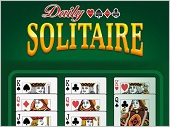
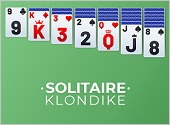
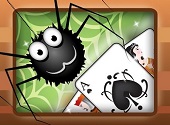
Solitaire card games (13 variants here) are exercises in sequential planning. Every move affects what becomes available next, so you're constantly projecting forward and deciding which short-term sacrifice leads to the best long-term outcome. Freecell takes this further by making all cards visible from the start, turning the game into a pure logic problem. Spider Solitaire and Forty Thieves layer in multiple tableaux that must be managed simultaneously, training divided attention.
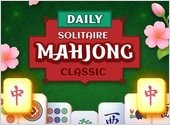
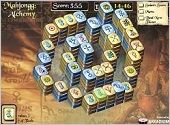
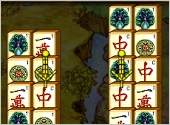
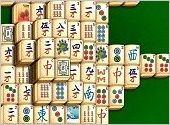
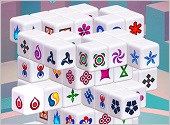
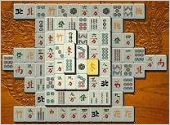
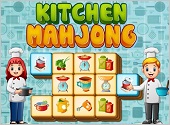
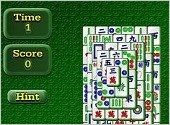
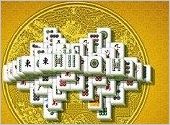
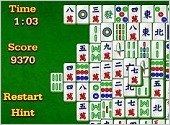
Mahjong tile games (20 variants here) exercise visual scanning and pattern recognition. The core task is finding matching tiles across a complex, layered layout while tracking which pairs can actually be removed based on their position. Timed variants like Mahjong Connect add processing speed pressure. Three-dimensional versions like Mahjong Dimensions require mental rotation of objects, a spatial skill that declines with age but responds well to practice. For dedicated mahjong options, see the mahjong games page.
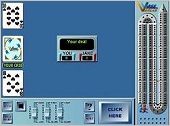
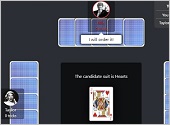
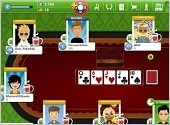
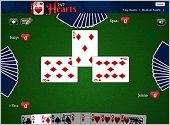
Multiplayer card games (Hearts, Spades, Cribbage, Euchre, Gin Rummy, UNO) add a dimension that solo games can't replicate: you're tracking what other players have done, inferring what they're likely holding, and adjusting your strategy in real time. This kind of social cognition, reading intentions and adapting to others, is one of the most complex things the human brain does.
What the Research Shows
The cognitive value of card and tile games isn't just intuitive; it's supported by a growing body of research. A 2018 study designed a battery of card games specifically targeting executive control functions (attention shifting, working memory updating, and inhibition) in older adults. The card-game training group showed significant improvement on untrained cognitive tests compared to both an active control group and a waitlist group.[1] The key insight: card games naturally combine multiple cognitive demands in a single activity, which appears to be more effective than training one skill in isolation.
The evidence is especially strong for mahjong. A 2024 scoping review examined 53 studies on mahjong and cognitive function in older adults. Across 47 observational studies and 6 intervention studies, the consistent finding was that more mahjong experience was associated with better cognitive, psychological, and functional abilities.[2] Mahjong engages pattern recognition, working memory, and rapid visual processing simultaneously, which likely explains why the benefits appear across multiple cognitive domains rather than a single skill.
Perhaps the most compelling evidence comes from a 10-year prospective study of over 11,000 older adults in China. Regular card and mahjong players had a significantly lower risk of developing dementia compared to non-players, even after controlling for education, physical activity, and other lifestyle factors.[3] The researchers noted that the combination of cognitive stimulation and social interaction during gameplay may contribute to building cognitive reserve.
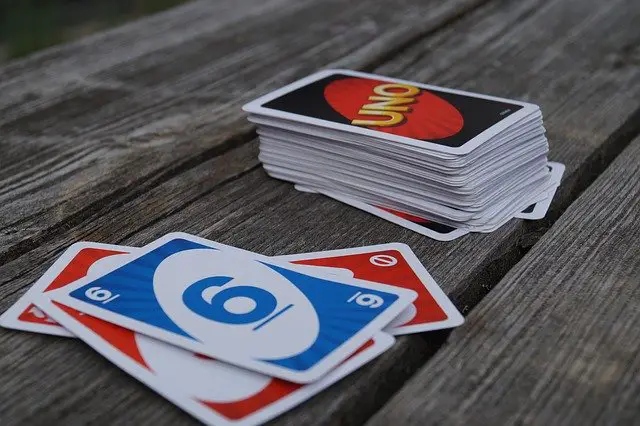
Card and tile games train different cognitive skills depending on the game type
Choosing a Game by Skill
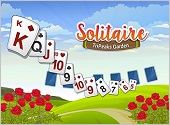
Sequential planning and logic. Freecell Solitaire is the standout here: with all cards face-up, every game is theoretically solvable through pure logic. Spider Solitaire and Forty Thieves add complexity by requiring you to manage multiple columns at once. Pyramid Solitaire and Tripeaks train quick mental arithmetic (finding pairs that sum to 13). If you're newer to solitaire, Klondike or Classic Solitaire are the best starting points. For more solitaire options, see the solitaire games page.
Visual pattern recognition. The mahjong games are built for this. Mahjong Solitaire and Mahjong Deluxe are the classic tile-matching experience. Mahjong Connect and its variants change the mechanic: instead of removing stacked tiles, you draw paths between matching pairs, adding spatial reasoning to the pattern-matching task. Mahjong Dimensions puts tiles on a rotating 3D cube, requiring mental rotation skills.
Working memory and card tracking. Hearts and Spades demand that you track which cards have been played, remember what's been passed, and infer what opponents are holding. Euchre compresses this into a smaller deck, making the tracking faster-paced. Cribbage layers in mental arithmetic: counting combinations to 15 and 31 while planning your discard strategy.
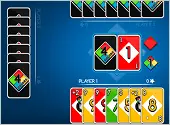
Speed and reaction time. UNO Card Game and UNO Lightning are fast-paced matching games that train processing speed and quick decision-making. The timed mahjong variants (Mahjong Connect, Mahjong Kitchen) add time pressure to visual scanning tasks.
Relaxed, low-pressure play. Rummikub blends number manipulation with pattern matching at a comfortable pace. Algerian Patience and Golf Solitaire offer straightforward solitaire play without the complexity of Spider or Forty Thieves. Mahjong EZ is designed as an easier entry point for mahjong tile matching.
Getting More from Card & Tile Games
The research points to a few practical strategies for maximizing cognitive benefit. First, the multiplayer card games appear to offer something extra beyond the cognitive workout: the social interaction component may independently contribute to brain health.[3] If you typically play solo solitaire or mahjong, mixing in a few rounds of hearts or cribbage against AI opponents still exercises the opponent-modeling skills, though playing with real people adds even more value.
Second, try games from different families rather than sticking to one favorite. A solitaire session exercises planning; a mahjong session exercises visual processing; a round of cribbage exercises arithmetic and card tracking. Rotating between them means you're training a broader range of abilities over time.
And here's a tip for when you're away from the screen: standard playing cards are one of the best offline brain-training tools available. Games like hearts, cribbage, and gin rummy translate directly to the table. There are even solitaire card games designed to train working memory that you can play with a physical deck.
More Free Brain Games
Looking for other types? The full games directory has 200+ games organized by category, including board games, puzzles, memory games, and word games. If you prefer pencil-and-paper challenges, check out the printable puzzles section.
Published: 10/04/2013
Last Updated: 02/13/2026
Content on this page adheres to my editorial standards. See the medical disclaimer regarding health-related information.
References & Research
I've reviewed these sources and selected them for their relevance to understanding card and tile games and cognition. Here's what each contributes:
1. Kuo, C.-Y., Huang, Y.-M., & Yeh, Y.-Y. (2018). "Let's Play Cards: Multi-Component Cognitive Training With Social Engagement Enhances Executive Control in Older Adults." Frontiers in Psychology, 9, 2482. Full text at PMC
Researcher's Note: This study is notable because the researchers didn't just have people play random card games. They designed specific card games based on three theoretical models of executive function, targeting attention shifting, working memory updating, and inhibition. The card-game group improved significantly on untrained cognitive tests compared to both an active control group (who played commercial board games) and a waitlist group. This matters because improvement on untrained tests suggests genuine cognitive gains, not just getting better at the specific game you practiced.
2. Tse, Z. C. K., Cao, Y., Chau, B. K. H., et al. (2024). "Does Playing Mahjong Benefit Older Individuals? A Scoping Review." The Journal of Prevention of Alzheimer's Disease, 11(5), 1363-1377. Full text at PMC
Researcher's Note: This is the most comprehensive review of mahjong research to date, covering 53 studies across Western and Asian databases. The breadth is the strength: observational studies consistently linked mahjong experience with better cognitive, psychological, and functional abilities in older adults, while the six intervention studies showed measurable gains in specific domains. The authors are careful to note that most evidence is still observational, but the consistency across dozens of studies from different research teams and countries makes a strong circumstantial case.
3. Tian, G., Shuai, J., Li, R., et al. (2022). "Association Between Playing Cards/Mahjong and Risk of Incident Dementia Among the Chinese Older Adults: A Prospective Cohort Study." Frontiers in Aging Neuroscience, 14, 966647. Full text at PMC
Researcher's Note: This is among the strongest evidence linking card and tile games to long-term brain health. The study followed 11,821 dementia-free adults aged 65 and older for 10 years through the Chinese Longitudinal Healthy Longevity Survey. Regular card and mahjong players had significantly lower dementia incidence even after adjusting for education, physical activity, and health status. As with all observational studies, causation can't be proven (healthier people may choose to play more), but the large sample, long follow-up period, and careful control for confounders make this one of the more convincing studies available.
Newest / Popular
Multiplayer
Board Games
Card & Tile
Concentration
Daily Games
Math / Memory
Puzzles
Time Mgmt
Word Games
- Retro Flash -
Also:
Bubble Pop
• Solitaire
• Tetris
Checkers
• Mahjong Tiles
•Typing
No sign-up or log-in needed. Just go to a game page and start playing! 

Sudoku, Kakuro, Word Searches, Crosswords, Slitherlink & more!
Hundreds of printable puzzles you can download, print, and solve with pencil and paper.

Hippocampus? Working memory? Spaced repetition?
Look up memory or brain terms in the A-Z glossary of definitions.