- Home
- Brain Games
- Free Online Brain Games
- Free Math Games
Free Math Games: Logic Puzzles & Arithmetic Training
The math games here split into two fundamentally different brain workouts: logic puzzles (sudoku, kakuro, calcudoku) that train deductive reasoning, and arithmetic games that build raw numerical speed. Both use numbers, but they exercise your brain in very different ways. Pick a game and play; no login needed. For all game categories, see the full games directory.
Note: If the games won't open, please: 1) turn off Adblock for this site, or 2) try with a different browser.


Two Kinds of Number Games, Two Different Workouts
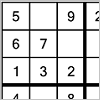
This distinction matters more than most game sites acknowledge. When you play sudoku, you're not actually doing math. You're doing logic: eliminating possibilities, applying constraints, and deducing which number must go where.
The numbers could be replaced with colors or symbols and the puzzle would work identically. Sudoku, kakuro, calcudoku, and picross nonograms all belong to this family of constraint-satisfaction puzzles. They train deductive reasoning, pattern recognition, and the ability to hold multiple possibilities in working memory while systematically narrowing them down.
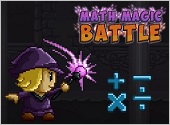
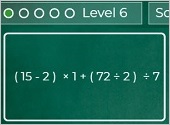
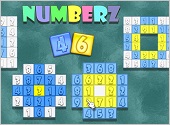
The arithmetic games, on the other hand, are genuine math workouts. Math Aliens, Numberz Addition, and Math Magic Battle all require you to actually compute under time pressure. Speed matters. The cognitive demand is different: less about logic and more about retrieving math facts quickly, maintaining accuracy as pace increases, and building what researchers call numerical fluency.
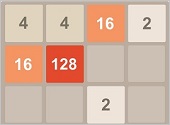
Then there's 2048, which sits in between. It uses numbers and addition, but the real challenge is spatial planning: deciding which direction to slide tiles to build toward higher values without trapping yourself. It's closer to a strategy game with a number skin.
What the Research Shows
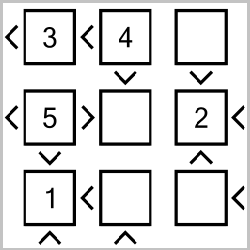
Both types of math games have research backing, though from different angles. Logic puzzles like sudoku have been studied primarily for their association with maintained cognitive function in aging. A neuroimaging study using functional near-infrared spectroscopy (fNIRS) found that solving sudoku puzzles significantly activated both medial and lateral regions of the prefrontal cortex, the brain area responsible for planning, decision-making, and working memory.[1]
The researchers found that the medial prefrontal cortex played a particularly important role when participants needed to search for and select among different solving strategies, suggesting that sudoku exercises higher-order executive functions, not just basic pattern matching.
Longitudinal data supports the connection between number puzzles and cognitive maintenance. An analysis of the Survey of Health, Ageing and Retirement in Europe (SHARE), which tracked adults across multiple countries, found that regular engagement with number and word puzzles was associated with better cognitive function at follow-up, even after accounting for baseline abilities.[2]
Separately, a large-scale study of over 65,000 participants found that sudoku frequency was positively associated with performance on tests of grammatical reasoning, spatial working memory, and episodic memory.
For the arithmetic side, a randomized controlled trial at Tohoku University tested whether daily arithmetic practice could improve cognitive function in healthy older adults (ages 70 to 86). The group that practiced reading and solving arithmetic problems daily for six months showed significant improvements on tests of executive function and processing speed, and these gains were maintained at a six-month follow-up.[3]
The key finding: the benefits transferred to cognitive tests that had nothing to do with arithmetic, suggesting that the mental effort of rapid calculation exercises general-purpose cognitive processes.
Choosing a Game by Skill
Deductive reasoning and working memory. The sudoku variants (Daily Sudoku, Sudoku Daily, Sudoku Royal, Sudoku Ultimate) are the standout logic trainers. Each puzzle requires you to hold candidate numbers in mind while systematically eliminating possibilities.
Kakuro adds arithmetic to the logic, requiring sums to match target numbers. Calcudoku combines both approaches. If you enjoy these, the printable puzzles section offers sudoku, kakuro, futoshiki, and more on paper.
Arithmetic fluency and speed. Math Aliens, Math Magic Battle, Numberz Addition, and Numbers Challenge all drill computation under time pressure. These are particularly good for building the automatic retrieval of math facts, a skill that frees up working memory for more complex problem-solving. For focused multiplication practice, see the multiplication games page.
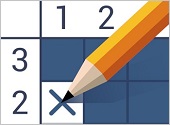
Visual logic and spatial reasoning. Picross Nonograms use number clues to reveal a hidden picture through row-and-column logic. The challenge is spatial: you're building a visual pattern from numerical constraints. This is a distinctly different workout from standard sudoku because you're reasoning about shapes, not just placing digits.
Strategic planning. 2048 tests your ability to think several moves ahead. Each tile slide has cascading consequences, and the game punishes impulsive play. Cash Back Counting combines arithmetic with real-world application, making change calculations under pressure.
Number tracking. Math Lines asks you to match numbers that sum to a target before they reach the center. It combines arithmetic with the visual tracking and timing of an arcade game, blending the two categories in a way that trains both calculation and reaction speed simultaneously.
Printable Math Puzzles & Study Aids
Beyond the online games, the Printable Puzzles section has a growing collection of free PDF logic puzzles you can solve on paper, including sudoku, kakuro, slitherlink, futoshiki, and more. I've also created some math-specific study aids:
Math Flash Cards (addition, subtraction, multiplication, & division)
Math students who want to test their recall of the multiplication table can try the 12 x 12 Timed Multiplication Exam. It takes 3 minutes, and you'll see your score at the end.
Getting More from Math Games
For logic puzzles, the most effective strategy is to gradually increase difficulty rather than staying at a comfortable level. A sudoku that you solve in two minutes without much thought isn't providing much cognitive challenge. Push into the next difficulty tier when puzzles start feeling routine.
For arithmetic games, speed and accuracy both matter. Research suggests that the cognitive benefits of arithmetic practice come partly from the effort of rapid fact retrieval under time pressure.[3] If you're making a lot of errors, slow down slightly; if the pace feels easy, push for faster times.
Mixing both types of math games gives your brain a broader workout. Logic puzzles exercise deliberate, analytical thinking. Arithmetic games exercise rapid, automatic processing. Together, they cover two ends of the cognitive spectrum that everyday life demands. For more on building a well-rounded brain training routine, see the Brain Games guide.
More Free Brain Games
Looking for other types? The full games directory has 200+ games organized by category, including board games, card & tile games, concentration games, memory games, puzzles, and word games. If you prefer pencil-and-paper challenges, check out the printable puzzles section.
Published: 10/04/2013
Last Updated: 02/13/2026
Content on this page adheres to my editorial standards. See the medical disclaimer regarding health-related information.
References & Research
I've reviewed these sources and selected them for their relevance to understanding how math-based games affect cognitive function. Here's what each contributes:
1. Ashlesh, P., Deepak, K.K., & Kochhar, K.P. (2020). "Role of Prefrontal Cortex during Sudoku Task: fNIRS Study." Translational Neuroscience, 11(1), 419-427. Full text at PMC
Researcher's Note: This neuroimaging study used functional near-infrared spectroscopy to measure prefrontal cortex activity during sudoku solving. The key contribution: it showed that the medial prefrontal cortex played a differential role when participants needed to search among heuristic rules, meaning sudoku doesn't just engage basic pattern matching. It requires the brain regions responsible for higher-order strategy selection and decision-making. The significant bilateral prefrontal activation across all 16 measurement points confirms that sudoku is a genuinely demanding cognitive task, not merely a leisure activity. The authors suggest sudoku could be useful for cognitive remediation training targeting prefrontal function.
2. Litwin, H., Schwartz, E., & Damri, N. (2017). "Cognitively Stimulating Leisure Activity and Subsequent Cognitive Function: A SHARE-based Analysis." The Gerontologist, 57(5), 940-948. Full text at PMC
Researcher's Note: This study analyzed data from the Survey of Health, Ageing and Retirement in Europe (SHARE), a major longitudinal study tracking adults across multiple countries. It found that engaging in cognitively stimulating leisure activities, specifically including number and word puzzles, was associated with better cognitive function at follow-up. What makes this paper useful is that it goes beyond simple correlation: it tracked participants over time and controlled for baseline cognitive ability, making a stronger case that puzzle engagement contributes to cognitive maintenance rather than simply reflecting pre-existing ability. The study also references a separate finding that sudoku specifically was associated with better grammatical reasoning and spatial working memory in 65,000+ participants.
3. Uchida, S., & Kawashima, R. (2008). "Reading and Solving Arithmetic Problems Improves Cognitive Functions of Normal Aged People: A Randomized Controlled Study." AGE, 30(1), 21-29. Full text at PMC
Researcher's Note: This is one of the few randomized controlled trials directly testing whether arithmetic practice improves cognitive function in older adults (ages 70-86). The experimental group practiced reading and solving arithmetic problems daily for six months. Their scores on executive function (FAB) and processing speed (Digit Symbol Substitution) improved significantly compared to controls, and the gains held at a six-month follow-up. Ryuta Kawashima, the senior author, is a prominent neuroscientist whose brain-imaging work led to the "Brain Age" series of commercial brain training games. This study is particularly relevant because it demonstrates transfer: arithmetic practice improved cognitive skills beyond just getting better at arithmetic.
Newest / Popular
Multiplayer
Board Games
Card & Tile
Concentration
Daily Games
Math / Memory
Puzzles
Time Mgmt
Word Games
- Retro Flash -
Also:
Bubble Pop
• Solitaire
• Tetris
Checkers
• Mahjong Tiles
•Typing
No sign-up or log-in needed. Just go to a game page and start playing! 

Sudoku, Kakuro, Word Searches, Crosswords, Slitherlink & more!
Hundreds of printable puzzles you can download, print, and solve with pencil and paper.

Hippocampus? Working memory? Spaced repetition?
Look up memory or brain terms in the A-Z glossary of definitions.