- Home
- Brain Games
- Free Online Brain Games
- Free Daily Games
Free Daily Games: A New Puzzle Every Day
Most brain games let you play as much as you want. These are different: each one serves a fresh puzzle every day. That constraint turns out to be an advantage. When you know there's one puzzle waiting for you, it's easier to build a routine around it than to face an unlimited library and tell yourself you'll "get to it eventually." Pick one and play, or build a rotation across several. No login needed. For all game categories, see the full games directory.
Note: If the games won't open, please: 1) turn off Adblock for this site, or 2) try with a different browser.




Why Daily Practice Matters

The most consistent finding in research on cognitive leisure activities is that regularity of engagement matters. Not how hard you push in a single session, not how many puzzles you solve in a weekend, but how often you show up over months and years.
The Paquid study tracked over 3,600 older adults in France across 20 years and found that regular board game players had a 15% lower risk of developing dementia compared to non-players, even after adjusting for education, depression, and baseline cognitive status.[1]
The key word is "regular." The benefit was associated with consistent engagement over time, not with occasional intense sessions.
A separate analysis of the Survey of Health, Ageing and Retirement in Europe (SHARE), which tracked over 16,000 adults aged 65 and older across multiple European countries, found that regular engagement with number and word puzzles was associated with better cognitive function at follow-up, even after accounting for baseline abilities.[2]
Again, the pattern was the same: people who played regularly showed better outcomes than those who didn't, regardless of how much they played in any single sitting.
These are observational studies, not randomized trials, so they can't prove that the puzzles caused the cognitive benefits. People who stay cognitively active may differ from those who don't in ways the studies can't fully account for. But the consistency of this pattern across multiple large cohorts, different countries, and different types of cognitive activities makes it worth paying attention to.
The practical takeaway: if you're going to play brain games, playing a little bit most days is a better strategy than playing a lot on weekends. Daily games make that easy because the puzzle is already there waiting for you.
Choosing by Cognitive Skill
Not all puzzles exercise the same mental abilities. The daily games in this collection span four broad cognitive categories, which means you can target specific skills or mix them for a broader workout.
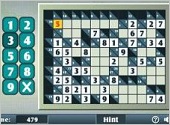
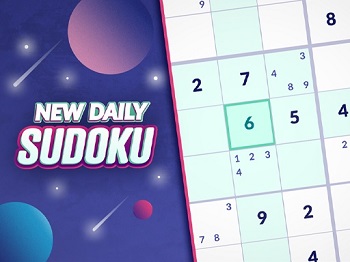
Logic and constraint reasoning. Sudoku Daily, Calcudoku Daily, and Kakuro Daily are all constraint-satisfaction puzzles. You're placing numbers in a grid while following rules that restrict what can go where.
The core cognitive demand is holding multiple possibilities in working memory while systematically narrowing them down through deduction. Calcudoku and Kakuro add arithmetic to the logic. For more number-logic games and printable versions, see the math games and printable puzzles pages. Note: Calcudoku and Kakuro work best on desktop computers.
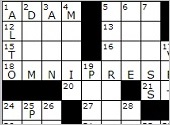
Language and vocabulary. Crosswords Daily and Wordler Daily exercise the language network. Crosswords require retrieving words from definitions or partial letter patterns, testing vocabulary breadth and flexible word association.
Wordler tests deductive reasoning applied to language: narrowing down a word from feedback on previous guesses. Both engage a different part of your brain than the number-logic puzzles. For more word games, see the word games hub.
Spatial processing. Jigsaw Daily exercises visuospatial reasoning: scanning shapes, mentally rotating pieces, and assembling a visual whole from fragments. These spatial skills (perception, mental rotation, processing speed) are distinct from the logical reasoning that number puzzles train, which is why adding a jigsaw to a Sudoku routine broadens the cognitive workout.
Visual scanning and pattern recognition. Mahjong Daily and Jewels Blitz Mahjong Daily are tile-matching games that exercise rapid visual search across a layered board. You're scanning dozens of tiles, identifying matching pairs, and deciding which to remove first so you don't strand tiles deeper in the stack.
That combination of visual discrimination, strategic sequencing, and spatial awareness across stacked layers makes mahjong one of the most cognitively broad daily games in this collection. For more mahjong variants and the research behind them, see the Card & Tile Games hub.
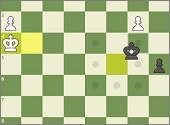
Strategic planning. Chess Puzzle Daily presents a board position and asks you to find the best move. This is concentrated strategic thinking: calculating sequences, evaluating threats, and predicting consequences. For more strategy games, see the board games hub.
Sequential planning. Solitaire Daily exercises the ability to plan a sequence of moves while managing competing constraints. Solitaire engages planning, working memory, and tracking hidden information. For more solitaire variants, see the solitaire hub.
Building a Daily Routine
You don't need to play all eight every day. A better approach is to pick two or three that exercise different cognitive skills and rotate through them across the week.
A simple starting point: pair a logic puzzle (Sudoku, Calcudoku, or Kakuro) with a language puzzle (Crosswords or Wordler). That covers two of the broadest cognitive categories in about 15 minutes. Add Jigsaw or Chess Puzzle on alternating days if you want spatial or strategic variety.
Why variety helps: a study of 209 participants playing 20 different casual games found that different game types were associated with different cognitive abilities on standardized tests. Games involving spatial manipulation mapped to visuospatial skills; games involving rapid processing mapped to processing speed.[3] This suggests that playing different puzzle types exercises a broader range of cognitive abilities than sticking with a single format.
The key is building a habit rather than setting a goal. If you play most days, the occasional missed day doesn't matter. The research on cognitive leisure activities finds that regular engagement over months and years is what's associated with better outcomes, not perfection.
More Free Brain Games
These daily games are a small subset of the 200+ free brain games on the site. For unlimited-play versions and more variety, browse the full games directory or the category hubs: Board Games, Card & Tile, Concentration, Math, Mahjong, Memory, Puzzles, Solitaire, Word Games, and Typing.
For printable puzzles you can solve on paper, see the Printable Puzzles collection. For more on how different game types target different cognitive skills, see the Brain Games guide.
Published: 03/31/2026
Last Updated: 04/09/2026
Content on this page adheres to my editorial standards. See the medical disclaimer regarding health-related information.
References & Research
I've reviewed these sources and selected them for their relevance to understanding how regular cognitive engagement relates to brain health. Here's what each contributes:
1. Dartigues, J.-F., Foubert-Samier, A., Le Goff, M., Viltard, M., Amieva, H., Orgogozo, J.-M., Barberger-Gateau, P., & Helmer, C. (2013). "Playing Board Games, Cognitive Decline and Dementia: A French Population-Based Cohort Study." BMJ Open, 3(8), e002998. Full text at PMC
Researcher's Note: This study followed 3,675 older adults in southwest France for 20 years as part of the Paquid cohort. Regular board game players had a 15% lower risk of developing dementia compared to non-players, after adjusting for age, sex, education, and depression. The study is observational, so it can't prove causation, but the 20-year follow-up period and careful adjustment for confounders make it one of the most robust examinations of this association. The finding supports the idea that regular cognitive engagement over many years, not just occasional play, is what's associated with better outcomes.
2. Litwin, H., Schwartz, E., & Damri, N. (2017). "Cognitively Stimulating Leisure Activity and Subsequent Cognitive Function: A SHARE-based Analysis." The Gerontologist, 57(5), 940-948. Full text at PMC
Researcher's Note: This analysis of the SHARE dataset tracked 16,572 adults aged 65 and older across multiple European countries. Regular engagement with cognitively stimulating activities (including number and word puzzles such as Sudoku) was associated with better cognitive function in memory, numeracy, and verbal fluency two years later, even after accounting for baseline cognitive ability. The multinational design and large sample size give this study broad generalizability. For the daily games context, the key finding is that consistent engagement with puzzles, the kind of regular habit that daily games encourage, showed the strongest associations with maintained cognitive function.
3. Baniqued, P. L., Lee, H., Voss, M. W., Basak, C., Cosman, J. D., DeSouza, S., Severson, J., Salthouse, T. A., & Kramer, A. F. (2013). "Selling Points: What Cognitive Abilities are Tapped by Casual Video Games?" Acta Psychologica, 142(1), 74-86. Full text at PMC
Researcher's Note: This study had 209 participants play 20 different casual games and then complete a battery of standardized cognitive tests. The researchers mapped which game types loaded on which cognitive abilities. Spatial games mapped to visuospatial skills; rapid-processing games mapped to processing speed; reasoning games mapped to fluid intelligence. This matters for building a daily rotation because it confirms that different puzzle types exercise genuinely different cognitive abilities. Playing only Sudoku strengthens logic, but adding a jigsaw for spatial reasoning and a crossword for vocabulary retrieval produces a broader cognitive workout.
Newest / Popular
Multiplayer
Board Games
Card & Tile
Concentration
Daily Games
Math / Memory
Puzzles
Time Mgmt
Word Games
- Retro Flash -
Also:
Bubble Pop
• Solitaire
• Tetris
Checkers
• Mahjong Tiles
•Typing
No sign-up or log-in needed. Just go to a game page and start playing! 

Sudoku, Kakuro, Word Searches, Crosswords, Slitherlink & more!
Hundreds of printable puzzles you can download, print, and solve with pencil and paper.

Hippocampus? Working memory? Spaced repetition?
Look up memory or brain terms in the A-Z glossary of definitions.