Memory Improvement Tips: Learn Faster, Remember More
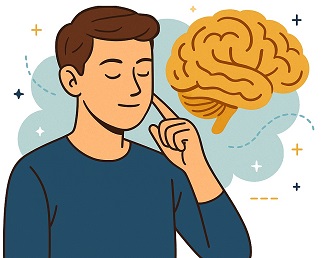
Here's something most people get wrong about memory: they think of it as a single thing you either have or you don't. In reality, memory improvement works on three distinct fronts, and the most effective approach combines all three.
(1) Brain Health. This includes the lifestyle factors that influence how well your memory hardware functions. Sleep, exercise, nutrition, and stress management all affect your baseline cognitive capacity. Get these wrong, and no technique will save you.
(2) Memory Skills. These learning and memory techniques help you encode and retain specific information. Some of these methods have been used for over two thousand years because they work. Roman orators memorized hour-long speeches without notes using the same principles you can learn today.
(3) Mental Exercise. Stimulate your brain through games and puzzles that challenge your cognitive abilities. The research here is more nuanced than the brain training industry would have you believe, but there's real value when expectations are realistic.
I'm Douglas, and I've been researching and writing about memory since 2006. My background includes biomedical sciences training, a degree in mathematics and statistics, and years as a technical writer. I read the actual research, not just press releases. When I cite a study, I've reviewed the paper. You can see exactly how I evaluate sources in my editorial standards.
(1) Brain Health: The Foundation
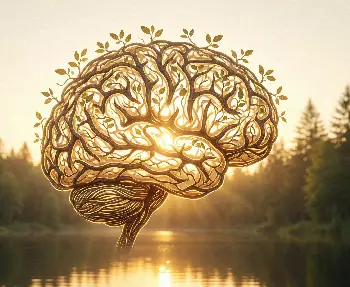
Your brain is biological machinery, and like any machinery, it performs better when properly maintained. The lifestyle factors that affect memory aren't mysterious. They're the same things that affect overall health, but their impact on cognition is often underestimated.
Sleep may be the single most important factor. During sleep, your brain consolidates memories from the day, transferring them from temporary to long-term storage. Large studies confirm that this consolidation process gets interrupted when you cut sleep short.[1] Chronic sleep deprivation doesn't just make you tired; it actively impairs your ability to form new memories. Most adults need 7-9 hours per night, and those hours aren't negotiable if you want your memory to function well.
Exercise directly affects brain structure. Research demonstrates that aerobic exercise actually increases the size of the hippocampus, the brain region most associated with memory. This isn't a small effect: one year of regular walking reversed age-related volume loss by one to two years in older adults.[2] You don't need to run marathons. Brisk walking for 30 minutes, several times a week, produces measurable benefits.
Nutrition provides the raw materials your brain needs to function. The Mediterranean diet, rich in fish, olive oil, vegetables, and whole grains, is associated with better cognitive outcomes in multiple studies. Staying hydrated matters too. Many people are mildly dehydrated without realizing it, and your brain is sensitive to hydration status.
Stress is a memory killer. Chronic stress floods your brain with cortisol, which impairs the hippocampus and makes both encoding and retrieval harder. Managing stress through exercise, meditation, social connection, or whatever works for you isn't just about feeling better. It's about protecting your cognitive function.
For an overview of each factor, see the Brain Health section. If you want to start with one change, prioritize sleep. It's the foundation everything else rests on (pun intended).
(2) Memory Skills: Encoding and Retention

Memory techniques solve two distinct problems: getting information into your brain in retrievable form (encoding), and keeping it accessible over time (retention). Different techniques address each challenge.
Encoding techniques transform abstract information into vivid mental images. The Memory Palace (also called the Method of Loci) is the most powerful. You mentally place items along a route you know well, like the path through your house. I used this method to memorize the 50 U.S. states in alphabetical order in about 20 minutes. Weeks later, I could still recite them forward, backward, or from any starting point.
Other encoding methods include the Link Method for chaining items together, the Peg System for numbered lists, and number systems for memorizing digits. Each has strengths for different types of information.
Retention techniques determine whether what you learn today will still be there next month. Even perfectly encoded memories fade without strategic review. Decades of research confirm that spaced repetition, reviewing material at gradually increasing intervals, produces far better long-term retention than massing practice into a single session.[3] Apps like Anki automate this process, scheduling reviews at optimal times.
Active recall, testing yourself rather than passively re-reading, strengthens memory far more than simple review. The effort of retrieving information is precisely what makes it stick. This is one of the most actionable findings in learning research.[4]
For a complete overview, see the Memory Skills section. For strategies you can use immediately, start with Quick Memory Tips.
(3) Mental Exercise: Brain Games and Beyond
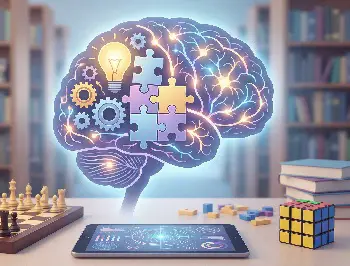
Can online brain games make you smarter? The honest answer: they improve the specific skills they train, but they won't turn you into a genius or prevent dementia on their own.
Recent meta-analyses confirm that brain training games can produce statistically significant improvements in processing speed, working memory, and attention. The effects are real but targeted: you get better at the skills the games train. What they probably won't do is boost your general intelligence or serve as a standalone defense against cognitive decline.[5]
That's actually useful information. If you want to maintain processing speed, games that challenge quick visual identification help. If you want to exercise working memory, matching games and sequence challenges target that function. The key is matching the game type to the skill you want to develop.
Beyond specific cognitive benefits, there's value in engaging your brain with challenging activities. One study found that older adults learning multiple new skills simultaneously showed cognitive improvements similar to people 30 years younger. Challenging your brain with genuine novelty, whether through games, puzzles, or learning new skills, provides stimulation that passive entertainment doesn't.[6]
200+ Free Brain Games:
Mahjong · Solitaire · Sudoku · Tetris · Checkers · Crosswords · Word Games · Puzzles · Most Popular
The Brain Games section offers games organized by the cognitive skills they exercise. No login required. But remember: brain games work best as one component of an overall approach that includes lifestyle factors and memory techniques.
Which Approach Fits You?
If your memory feels generally foggy, start with brain health. Are you getting enough sleep? Exercising regularly? These basics often explain more than people realize.
If you need to memorize specific information, learn a memory technique. The Memory Palace takes some practice but pays off enormously. For simpler needs, the Link Method or basic mnemonic devices might be enough.
If you're studying for exams, focus on retention strategies. Spaced repetition and active recall will help you remember what you learn far better than re-reading your notes. See Learning Strategies for research-backed study methods.
If you want to stay sharp as you age, combine regular mental challenge with physical exercise and social engagement. The evidence for this combination is stronger than for any single intervention.
Understanding How Memory Works
You don't need to understand neuroscience to improve your memory, but a basic grasp of how memory functions can help you use techniques more effectively.
Memory isn't a single system. You have working memory (your mental scratchpad for the current moment), short-term memory (lasting seconds to minutes), and long-term memory (lasting days to decades). Information flows from perception through these stages, with most of it lost along the way. The techniques on this site are designed to move more information into long-term storage and keep it retrievable.
For a quick overview, see How Memory Works. If you encounter unfamiliar terminology, the Memory Glossary explains key terms.
More Resources
Quick Memory Tips – Practical strategies you can use today for encoding, retention, and mindset.
Improve Your Concentration – Attention is the gateway to memory. Techniques for better focus.
Free Printables – Downloadable puzzles, flash cards, maps, and learning tools.
What's New – Recent updates to the site.
Why This Site Exists
I got interested in memory techniques during my technical writing career when an instructor introduced us to the Memory Palace. I used it to memorize the Bill of Rights in one session, and weeks later could still recite them in any order. That experience led me to Harry Lorayne's The Memory Book and eventually to the science behind why these methods work.
There's also a personal dimension. My grandmother died of ALS before I knew her, and my great-grandmother had Alzheimer's. Neurological health isn't an abstract topic for me.
This site exists because I wanted a place where real information about memory lived, free from the hype that dominates this space. No "unlock your brain's potential" nonsense. No miracle supplements. Just what the research actually shows, explained clearly enough that you can use it.
If you find something useful here, I'm glad. If you spot an error, let me know. Accuracy matters to me.
Thanks for visiting,

Important: This site provides educational information, not medical advice. If you have concerns about memory loss or cognitive health, please consult a healthcare professional. See my Medical Disclaimer.
References & Research
I've reviewed these sources and selected them for their relevance to understanding memory improvement. Here's what each contributes:
1. Rasch, B., & Born, J. (2013). "About Sleep's Role in Memory." Physiological Reviews, 93(2), 681-766. Free full text at PMC
Researcher's Note: This comprehensive review synthesizes decades of research on how sleep consolidates memory. Sleep isn't just rest for the body; it's an active process where the brain reorganizes and strengthens memories, particularly during slow-wave sleep. If you want to understand why sleep deprivation hurts memory, this is the definitive source.
2. Erickson, K.I., Voss, M.W., Prakash, R.S., et al. (2011). "Exercise training increases size of hippocampus and improves memory." Proceedings of the National Academy of Sciences, 108(7), 3017-3022. Free full text at PMC
Researcher's Note: This landmark randomized controlled trial showed that one year of aerobic exercise increased hippocampal volume by 2% in older adults, effectively reversing 1-2 years of age-related shrinkage. The hippocampus is critical for memory formation, and this study demonstrates that its decline with age is not inevitable. Walking works.
3. Cepeda, N.J., Pashler, H., Vul, E., Wixted, J.T., & Rohrer, D. (2006). "Distributed practice in verbal recall tasks: A review and quantitative synthesis." Psychological Bulletin, 132(3), 354-380. Free PDF
Researcher's Note: This meta-analysis synthesizes decades of research on spacing effects. The conclusion is unambiguous: distributing practice over time produces substantially better long-term retention than massing practice into a single session. One of the most actionable findings in memory research.
4. Dunlosky, J., Rawson, K.A., Marsh, E.J., Nathan, M.J., & Willingham, D.T. (2013). "Improving Students' Learning With Effective Learning Techniques." Psychological Science in the Public Interest, 14(1), 4-58. ResearchGate
Researcher's Note: This landmark review evaluated ten learning techniques for effectiveness. Practice testing (active recall) and distributed practice (spacing) received the highest ratings. Highlighting and re-reading, which most students rely on, were rated low utility. This paper fundamentally shaped how I think about learning.
5. Somaa, F., Khan, A., & Arafah, A. (2025). "Efficacy of Brain Training Games on the Cognitive Functioning, Working Memory and Processing Speed of Healthy Individuals: A Meta-Analysis." Journal of Pharmacy and Bioallied Sciences, 17(Suppl 2), S1719-S1723. Free full text at PMC
Researcher's Note: This recent meta-analysis of 16 randomized controlled trials found statistically significant improvements in cognitive functioning, working memory, and processing speed from brain training games. The effects are real but targeted. Importantly, some studies found aerobic exercise equally or more effective.
6. Leanos, S., Kürüm, E., Strickland-Hughes, C.M., et al. (2023). "The Impact of Learning Multiple Real-World Skills on Cognitive Abilities and Functional Independence in Healthy Older Adults." The Journals of Gerontology: Series B, 78(8), 1305-1317. Free full text at PMC
Researcher's Note: Older adults who learned multiple new skills simultaneously (Spanish, drawing, music composition) showed cognitive improvements similar to people 30 years younger. Challenging your brain with genuine novelty produces real benefits, supporting the value of continued learning at any age.
Published: 02/10/2007
Last Updated: 01/19/2026

Newest / Popular
Multiplayer
Board Games
Card & Tile
Concentration
Daily Games
Math / Memory
Puzzles
Time Mgmt
Word Games
- Retro Flash -
Also:
Bubble Pop
• Solitaire
• Tetris
Checkers
• Mahjong Tiles
•Typing
No sign-up or log-in needed. Just go to a game page and start playing! 

Sudoku, Kakuro, Word Searches, Crosswords, Slitherlink & more!
Hundreds of printable puzzles you can download, print, and solve with pencil and paper.

Hippocampus? Working memory? Spaced repetition?
Look up memory or brain terms in the A-Z glossary of definitions.