|
Ever walk into a store to shop and forget half of what you came for? There's a fun and effective memory trick for holding a list in your head, and it works far better than repeating the items to yourself over and over. A famous experiment showed just how much better.
In 1969, psychologists Bower and Clark ran a simple experiment. They gave people lists of random words to memorize.
One group studied the words the normal way, by repeating them. The other group did something different. They turned the assigned word list into meaningful little connected stories.
Later, everyone was tested. The group that thought of stories remembered 93 out of every 100 words. The other group remembered just 13.
Same words. Same study time. Vastly better recall, just from connecting the words together in a string of small mental scenes.
That's the idea behind the link method, one of the most fundamental memory techniques there is. Today I'll briefly show you how to use it.
The email series so far:
1. Active recall • April 30
2. Spaced repetition • May 13
3. Make a picture • June 10
4. The link method (today)
Linking: Chain your pictures together
In the last issue, I showed you how to turn a single object or concept into a memorable mental picture. The link method takes the next step. It chains such pictures together, so you can remember an entire list in order.
Take a very short grocery list as an example. Say you need to buy three items: apples, bread, and milk. Before you begin forming links, first picture a giant apple-man character holding a shopping list as the seed image for the first item in the list.
Don't repeat the other words over-and-over to remember the rest of the list. Instead, create a mental link between your seed word (apples) and the next word, which is bread. Perhaps visualize apples raining down onto a loaf of bread, with bread crumbs flying everywhere! This is your mental link from apples to bread.
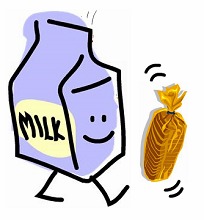 Now link the bread to the milk. Picture a huge milk carton with legs, kicking that loaf of bread like a football. Absurd? That's why it works. Your mind remembers the unusual, not the normal. Now link the bread to the milk. Picture a huge milk carton with legs, kicking that loaf of bread like a football. Absurd? That's why it works. Your mind remembers the unusual, not the normal.
Okay, now recall the list, one visual link at a time. The apple-man holding the grocery list gets you started. The apple-man reminds you of the next mental scene: a rain of apples smashes a loaf of bread.
Then, the bread in that scene reminds you of the loaf of bread getting kicked by the milk carton, which is the final word in the list. Each picture pulls up the next one, like links in a chain. Apples, bread, milk.
That's the whole method. Turn each item into a picture scene, and make each scene remind you of the item in the next one. These links can be extended to much longer lists.
Three rules for links that stick
• Make them interact. Don't picture the apple sitting next to the bread. Have it smash, kick, chase, or crush. Action sticks. Objects sitting quietly do not.
• Exaggerate. One normal apple is forgettable. A giant apple, or a rain of a hundred apples, is not. Make things huge, tiny, or way too many.
• Make it weird. A milk carton with legs? Kicking bread? Your brain skips past normal things, but it grabs onto anything strange.
Each link only involves two things: the item you just pictured, and the next one on the list. So a long list is never overwhelming. It's just one silly scene at a time.
When a chain comes in handy
The link method shines any time you need to remember things in order and can't write them down. A grocery list. Your errands for the day. The main points of a speech or a toast. The steps in a recipe.
With a little practice, you can chain 10 or 15 items in a few minutes and recall them hours later.
Remember the system
Notice how the pieces from this email series fit together now. You make vivid pictures (last issue). You chain them into a list (this issue). And if you want the chain to last beyond today, you review it: recall it tomorrow, then in a few days, then in a week. That's active recall and spaced repetition, from the first two issues. Encode it, connect it, review it.
Want to see a full link chain in action? On my website, I walk through a complete six-item shopping list, with a picture for every link. You'll also find more tips on forming good links in the chain, and when to use this method versus the memory palace. It's all on the link method page.
|