- Home
- Better Memory
- Brain Games
- Free Online Brain Games
- Computer Backgammon
Computer Backgammon - Multiplayer Option
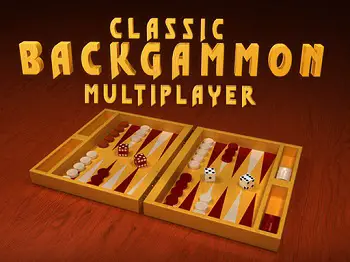
This free computer Backgammon game trains concentration and strategic thinking. Play single-player against the computer or multiplayer against real people.
This game is part of the free online brain games collection.
To begin, click the Small, Medium, or Large button under the picture of the game. This opens the game in a new window.
Computer Backgammon Instructions
In multiplayer mode, play a friend on the same computer, a friend on two different computers, or Quick Match against random opponents.
For other versions of online backgammon, see Backgammonia and Backgammon Windows.
Note: The instructions below are for the old Adobe Flash game.
The object of Backgammon is to move all your pieces around to the other side of the board before your opponent does the same. After rolling the dice, click the positions on the board where you want each of your backgammon checkers to go.
Your goal is to move all the white pieces from the top of the board counter-clockwise to the lower right. You can move one or two pieces based on what the dice show.
This computer backgammon game includes two different modes: 1) Play against the computer, and 2) Play against another person in Multiplayer mode.
In Multiplayer mode, you can play either against a random person, or you can set up your own backgammon "room". This allows you to play with a friend who can be anywhere - just call or email your friend with your backgammon "room" password, and you can play each other!
HOW TO PLAY. To begin this computer Backgammon game, roll the dice by clicking the dice on the right side when it is your turn.
Your moves must match the number of dots shown on the dice. For example, if you roll a 5 and a 6, you can either:
Move one piece 11 spaces, or
Move one piece 5 spaces and the other piece 6 spaces
If you roll doubles, you can make 4 moves.
CAPTURING. Slow down your opponent by capturing his pieces. If a single piece is left in a space, the opposing player has the opportunity to capture the piece and send it off the board. Their piece sits on the bar in the middle.
To block this from happening to you, try to time your moves so that there are always two or more of your pieces in a given slot. In other words, avoid stranding lone pieces.
If one of your pieces is captured, you can rescue the piece on the next turn and return it to the board.
To rescue your checker, first roll the dice, then pick one of the two die values as the slot in the upper right section of the board where your piece will be returned to. Click that slot to move your piece from the bar to there.
Known Glitch in the Old Adobe Flash Version
The Adobe Flash version of the computer backgammon game above has a glitch related to the rolling of doubles in a particular situation. The Flash version is the one that opens when you click the Old Adobe Flash Versoin link.
The glitch is this: When the computer's black tokens are trapped and unable to move from their own end and doubles roll, the black tokens ignore the fact they are trapped and they jump over the white blockers.
Thanks go to several visitors, especially Bill V., who reported this to me. Unfortunately I do not have the ability fix this issue as I am just a game publisher, not the developer.
Other Versions of Backgammon
If for some reason you don't like the computer Backgammon on this page, there are other free backgammon pages on my site you can try:
Both those pages have an Adobe Flash version and separate HTML5/Mobile version of online backgammon.
Published: 03/06/2010
Last Updated: 03/17/2022
New / Popular
Multiplayer
Board Games
Card & Tile
Concentration
Math / Memory
Puzzles A-M
Puzzles N-Z
Time Mgmt
Word Games
- Retro Flash -
No sign-up or log-in needed. Just go to a game page and start playing! 
100 Free Puzzle Printables:
Sudoku / Word Search