- Home
- Brain Health
- Nootropics Guide
What Are Nootropics? A Research-Based Guide

The term "nootropic" was coined in 1972 by Romanian psychologist Corneliu Giurgea, who combined the Greek words for "mind" (nous) and "to turn" (trepein). He was describing piracetam, a synthetic compound he had developed. Giurgea proposed that a true nootropic should enhance learning and memory, protect the brain from injury, and have very few side effects.
Fifty years later, the word has expanded far beyond what Giurgea imagined. Today "nootropic" is applied to everything from your morning coffee to high-dose herbal extracts to prescription medications. The global brain supplement market is worth billions, and the claims made by many products far outpace the evidence supporting them.
That doesn't mean the evidence is empty. For a handful of compounds, well-designed clinical trials show genuine effects on memory, attention, or processing speed. For others, the research is early or mixed. And for many ingredients found in popular supplements, there is almost no human data at all.
This page sorts through the research. No product recommendations, no sales pitches. Just what the clinical evidence actually shows, where it's strong, and where the gaps are.
The Landscape: Natural vs. Synthetic
Nootropics generally fall into three categories, and understanding them helps you evaluate any product or claim you encounter.
Natural compounds include herbs and plant extracts with long histories in traditional medicine, now being tested in clinical trials. Bacopa monnieri, Lion's Mane mushroom, Ginkgo biloba, and Panax ginseng are the most studied. These typically have more safety data but slower, subtler effects.
Nutritional compounds include substances found in food or produced by the body, sometimes taken in concentrated supplemental doses. Creatine, phosphatidylserine, omega-3 fatty acids, and L-theanine (an amino acid in tea) fall into this group. These are generally well-tolerated, and some have surprisingly robust cognitive research behind them.
Synthetic compounds include lab-created substances like the racetam family (piracetam, aniracetam), modafinil (a prescription wakefulness drug), and newer designer nootropics. Some have clinical research; others have almost none. Modafinil requires a prescription in most countries. Racetams occupy a legal gray area, sold as supplements in some places and regulated as drugs in others.
This page focuses primarily on the first two categories, which are the most relevant for people exploring over-the-counter options.
Ingredients with the Strongest Research
Not all nootropic ingredients are equal. The compounds below have been tested in multiple randomized, placebo-controlled clinical trials, the gold standard for evaluating any substance's effects. Even among these, the evidence varies in strength.
Bacopa Monnieri

Of all herbal nootropics, Bacopa monnieri has the most consistent clinical evidence. This small creeping herb has been used in Ayurvedic medicine for centuries. Its active compounds, called bacosides, appear to support synaptic communication and protect neurons from oxidative damage.
A 2014 meta-analysis of nine randomized controlled trials (518 total subjects) found that Bacopa supplementation significantly improved attention speed, measured by shortened choice reaction time. The studies used standardized extracts at doses of 300 to 450 mg per day for at least 12 weeks.[1]
A separate systematic review of six RCTs found that Bacopa improved performance on 9 of 17 memory free recall tests. The review noted, however, that evidence for improvements in other cognitive domains was limited, partly because studies used inconsistent testing methods.[2]
A 2024 systematic review of 22 clinical trials confirmed these earlier findings and added evidence that Bacopa may reduce markers of oxidative stress and inflammation in the brain, two processes that contribute to age-related cognitive decline.[3]
What the research consistently shows: Bacopa appears to improve memory recall and attention speed, with effects typically emerging after 8 to 12 weeks of daily use. What it doesn't show (yet): benefits for reasoning, language, or other cognitive domains beyond memory and attention. The effect sizes are real but modest. Study doses are typically 300 mg per day of a standardized extract (often standardized to 20% or higher bacosides).
Lion's Mane Mushroom (Hericium erinaceus)

Lion's Mane is an edible mushroom that has attracted significant research attention because of its unique bioactive compounds, hericenones and erinacines, which stimulate the production of nerve growth factor (NGF). NGF is a protein essential for the growth, maintenance, and survival of neurons, making Lion's Mane one of the few natural substances with a plausible mechanism for directly supporting brain cell health.
The landmark clinical trial was a 2009 Japanese study. In a double-blind, placebo-controlled design, 30 older adults diagnosed with mild cognitive impairment took Lion's Mane (3 g per day of dried powder) or placebo for 16 weeks. The supplementation group showed significantly improved scores on a cognitive function scale at weeks 8, 12, and 16. However, scores declined after supplementation was discontinued, suggesting the benefits require ongoing intake.[4]
More recent work includes a 2023 pilot study in 41 healthy young adults, which found improved performance on the Stroop task (a measure of processing speed and attention) after a single dose, with a trend toward reduced stress after 28 days of supplementation. But the study was small, and some results were mixed.[5]
Honest assessment: the human research on Lion's Mane is promising but still early. The trials are small (30 to 41 participants), and a larger Australian trial (436 participants, 24 weeks) found no cognitive benefit. The preclinical science showing NGF stimulation is compelling, but we need larger, longer human trials to know how reliably these effects translate. Extract type matters too: the bioactive compounds differ between the fruiting body and the mycelium, and not all commercial products specify which part they use.
Ginkgo Biloba

Ginkgo biloba is one of the most extensively studied herbal nootropics, with decades of clinical research. The evidence is strongest for its use in people with existing cognitive impairment rather than in healthy adults.
An overview of 10 systematic reviews covering Ginkgo's effects on mild cognitive impairment and dementia found that the standardized extract EGb 761, at doses of 240 mg per day, improved cognition, neuropsychiatric symptoms, and daily activities in a dose-dependent manner.[6] A meta-analysis of eight RCTs in dementia patients confirmed these benefits for both cognitive function and activities of daily living.[7]
For healthy adults without cognitive decline, the picture is less clear. The evidence is mixed, with some studies showing modest benefits to processing speed and others showing no effect. If you are a healthy younger adult looking for a cognitive edge, Ginkgo probably isn't your best option. If you are an older adult concerned about age-related cognitive decline, the research is more supportive, particularly for the standardized EGb 761 extract.
Safety note: Ginkgo has blood-thinning properties. Anyone taking anticoagulant or antiplatelet medications should consult a healthcare provider before using it.
Caffeine + L-Theanine

This is arguably the most widely consumed nootropic combination in the world. Every cup of tea contains both compounds naturally. What makes the combination interesting is how the two interact: caffeine provides alertness and focus, while L-theanine (an amino acid found almost exclusively in tea) smooths out the jitteriness and promotes a state of calm focus similar to what meditation promotes.
A systematic review of the combination's cognitive effects found improvements in attention switching accuracy, concentration, and alertness, with decreased distractibility during demanding tasks. The effects were observed in multiple studies at a range of doses.[8]
Individual studies have shown that even moderate doses (97 mg L-theanine plus 40 mg caffeine, roughly the amount in two cups of tea) improved task-switching accuracy and self-reported alertness.[9]
This combination is notable because the evidence is solid, the safety profile is excellent (it's tea), and the effective doses are achievable through ordinary dietary intake. You don't need a supplement for this one, though supplements delivering specific ratios (typically 2:1 L-theanine to caffeine) are widely available.
Phosphatidylserine
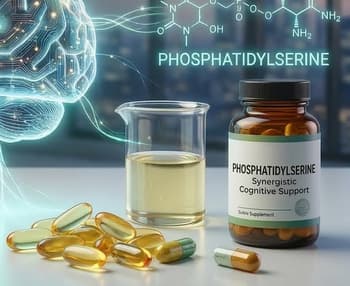
Phosphatidylserine (PS) is a phospholipid that makes up a significant portion of brain cell membranes. It plays a role in cell signaling, neurotransmitter release, and synaptic function. Levels decline with age, which has led researchers to test whether supplementation can slow cognitive aging.
Several clinical trials have shown positive results, particularly in older adults with memory complaints. A double-blind RCT in 78 elderly Japanese subjects found that 300 mg per day of soy-derived PS for six months improved verbal recall scores, with the strongest effects in a subgroup with lower baseline cognitive performance.[10] A separate pilot study in 30 elderly adults with memory complaints reported improvements in memory and learning within 12 weeks of PS supplementation (300 mg per day).[11]
The evidence is not unanimous. One larger study (120 subjects, soy-derived PS at 300 or 600 mg per day for 12 weeks) found no significant improvements. Overall, the research suggests PS may be most beneficial for older adults who are already experiencing mild memory complaints rather than for younger, healthy individuals.
Historical note: earlier studies used PS derived from bovine brain tissue, which showed stronger effects. Safety concerns about that source led to the switch to soy-derived PS, which may have a somewhat different efficacy profile.
Creatine
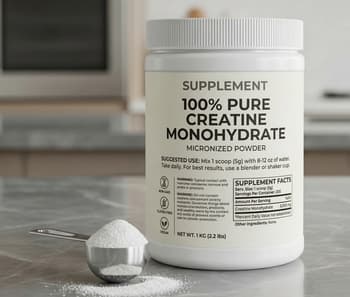
Most people associate creatine with athletic performance, but the brain is actually one of the most metabolically demanding organs in the body, and creatine plays a key role in brain energy metabolism. Brain cells use the creatine-phosphocreatine system to rapidly regenerate ATP, the cell's primary energy currency.
A 2023 systematic review and meta-analysis of 10 RCTs found that creatine supplementation (typically 5 g per day) had a positive effect on memory in healthy individuals. The effect was strongest in older adults and vegetarians (who have lower baseline creatine levels due to dietary intake).[12]
A broader 2024 meta-analysis of 16 RCTs (492 participants) confirmed significant improvements in memory, attention time, and processing speed, though not in overall cognitive function or executive function. Benefits appeared strongest in females, adults aged 18 to 60, and individuals under cognitive stress.[13]
One important note: the European Food Safety Authority (EFSA) reviewed a health claim application for creatine and cognition in 2024 and found that while individual studies showed promise, the overall evidence was not yet sufficient to authorize a formal health claim. That doesn't mean creatine doesn't work for cognition; it means the regulatory bar is high and the studies are still heterogeneous in their methods.
Creatine is inexpensive, has an excellent safety profile established over decades of sports research, and is one of the more intriguing nootropic candidates, especially for people who don't eat much red meat or fish.
What We Don't Know Yet
Even for the best-studied nootropics, there are real limitations in the research:
Most trials are short. The typical study runs 8 to 16 weeks. Very few have tracked effects beyond six months. We have limited data on whether long-term supplementation maintains benefits, increases them, or produces diminishing returns.
Sample sizes are often small. Many pivotal studies include fewer than 100 participants. The Lion's Mane and phosphatidylserine research in particular relies on small trials. Small studies can detect effects, but they are more prone to producing results that don't replicate in larger groups.
Population matters. An ingredient that helps a 70-year-old with mild cognitive impairment may do nothing for a healthy 30-year-old. Many nootropic studies are conducted in older adults or clinical populations, and the results may not generalize to younger, healthy brains that are already functioning well.
Dose and extract standardization vary widely. "Bacopa monnieri extract" on two different labels can mean very different things depending on the extraction method, the concentration of active bacosides, and the plant part used. Clinical trials typically use standardized, well-characterized extracts. Commercial supplements don't always match these specifications.
Interactions with medications are understudied. Most trials exclude participants taking prescription medications. If you are on medication for any condition, checking with a healthcare provider before adding a nootropic is especially important.
How to Evaluate Supplement Claims
The brain supplement market is full of bold promises. Here's how to assess them:
Look for "proprietary blends" on the label. This is a legal way for manufacturers to list ingredients without disclosing how much of each is in the product. If a supplement contains a "proprietary blend," you have no way of knowing whether the active ingredients are present at clinically studied doses or sprinkled in at trace amounts.
For instance, a 'Cognitive Blend 500mg' might contain 490 mg of cheap filler and 10 mg of the ingredient you actually want. Without per-ingredient dosing, you can't tell. Transparent labels list each ingredient with its specific dose.
Check the dose against the research. Bacopa is typically studied at 300 mg per day (standardized to at least 20% bacosides). Lion's Mane at 1 to 3 grams of dried mushroom powder. Phosphatidylserine at 300 mg per day. If a supplement contains 50 mg of an ingredient that was studied at 300 mg, the clinical evidence doesn't apply.
Be skeptical of "30+ ingredients" formulas. More ingredients isn't better. If a capsule contains 30 compounds at trace amounts, none of them are likely present at effective doses. A simpler product with two or three well-dosed ingredients is more likely to deliver what the research supports.
Look for third-party testing. Because dietary supplements are not regulated the way pharmaceuticals are, independent testing by organizations like NSF International, USP, or ConsumerLab provides assurance that the product actually contains what the label claims and is free of contaminants.
Understand what "clinically studied" means. A supplement ingredient can be called "clinically studied" if any study has been conducted on it, regardless of whether the results were positive or the study was well-designed. The phrase tells you almost nothing. Look for the actual research.
Food as a Nootropic

Some of the best-researched cognitive-support compounds are available through diet. Omega-3 fatty acids (especially DHA) are abundant in fatty fish and are critical for brain cell membrane structure. Flavonoids in blueberries and dark chocolate have been associated with improved blood flow to the brain. Curcumin in turmeric has anti-inflammatory properties, though its poor bioavailability limits how much the brain absorbs from food alone.
The broader point: before investing in supplements, the foundational elements of brain health matter most. The research consistently shows that adequate sleep, regular exercise, stress management, social connection, and a nutrient-rich diet have larger and more reliable effects on cognitive function than any supplement.
Nootropics are best thought of as potential additions to that foundation, not replacements for it. A person sleeping six hours a night and eating processed food is not going to supplement their way to better memory.
The Bottom Line
The nootropic category spans a wide range, from compounds with genuine clinical evidence to those riding on little more than marketing. Here's where things stand:
Bacopa monnieri has the strongest and most consistent evidence among herbal nootropics, particularly for memory recall and attention speed, at 300 mg per day for 12 or more weeks. Caffeine plus L-theanine is well-supported for attention and focus, with the added benefit of being available in any cup of tea.
Creatine is an emerging and underappreciated option for brain energy support, especially for older adults and those on plant-based diets. Ginkgo biloba has meaningful evidence for people with existing cognitive decline, less so for healthy younger adults. Phosphatidylserine and Lion's Mane show promise but need larger, longer trials to confirm their effects.
For all of these, realistic expectations matter. These are not dramatic cognitive enhancers. The effects in clinical trials are real but modest, typically improvements in specific test scores over weeks of use, not a sudden leap in mental performance. Anyone claiming otherwise is overselling.
For techniques that can improve your memory through practice rather than supplementation, see Memory Skills. And for a broader view of what protects and supports your brain over time, start with Brain Health.
Important: This page provides general educational information about nootropic compounds. It is not medical advice and does not recommend any specific product. Supplements can interact with medications and may not be appropriate for everyone. If you have concerns about cognitive function, memory loss, or any health condition, please consult a healthcare professional. See my Medical Disclaimer and Editorial Standards.
References & Research
I've reviewed these sources and selected them for their relevance to understanding the research on nootropics and brain supplements. Here's what each contributes:
1. Kongkeaw, C., Dilokthornsakul, P., Thanarangsarit, P., Limpeanchob, N., & Scholfield, C.N. (2014). "Meta-analysis of randomized controlled trials on cognitive effects of Bacopa monnieri extract." Journal of Ethnopharmacology, 151(1), 528-535. PubMed
Researcher's Note: This meta-analysis pooled data from nine RCTs (518 subjects total) and found Bacopa significantly improved attention speed, as measured by choice reaction time and Trail B test performance. All included studies were at least 12 weeks long and used standardized extracts. The low risk of bias across trials strengthens confidence in the findings. It's the most rigorous quantitative summary of Bacopa's cognitive effects available.
2. Pase, M.P., Kean, J., Sarris, J., Neale, C., Scholey, A.B., & Stough, C. (2012). "The cognitive-enhancing effects of Bacopa monnieri: a systematic review of randomized, controlled human clinical trials." Journal of Alternative and Complementary Medicine, 18(7), 647-652. PubMed
Researcher's Note: This systematic review examined six RCTs and found Bacopa improved 9 of 17 memory free recall tests. Importantly, the authors noted that many cognitive domains remained untested, meaning the absence of evidence for other benefits doesn't equal evidence of absence. The review highlights a significant gap: we know Bacopa helps with memory recall, but we can't yet say much about its effects on reasoning, language, or creative thinking.
3. Fatima, U., Roy, S., Ahmad, S., et al. (2024). "Investigating the Neuroprotective and Cognitive-Enhancing Effects of Bacopa monnieri: A Systematic Review Focused on Inflammation, Oxidative Stress, Mitochondrial Dysfunction, and Apoptosis." Antioxidants, 13(4), 393. Free full text at PMC
Researcher's Note: This 2024 review is valuable for going beyond "does it work?" to "how does it work?" It synthesized 22 clinical trials and identified specific neuroprotective mechanisms: Bacopa reduces inflammatory markers, combats oxidative stress, and supports mitochondrial function in neurons. These mechanisms help explain why effects take weeks to appear and why the compound may be more protective than acutely performance-enhancing.
4. Mori, K., Inatomi, S., Ouchi, K., Azumi, Y., & Tuchida, T. (2009). "Improving effects of the mushroom Yamabushitake (Hericium erinaceus) on mild cognitive impairment: a double-blind placebo-controlled clinical trial." Phytotherapy Research, 23(3), 367-372. PubMed
Researcher's Note: This is the foundational human trial for Lion's Mane and cognition. The study was well-designed (double-blind, placebo-controlled, randomized) and showed significant cognitive improvement at weeks 8, 12, and 16. The critical detail: scores declined four weeks after supplementation stopped. This suggests Lion's Mane supports cognitive function during use rather than producing lasting structural changes, at least at this dose and duration. The study was small (30 participants), so replication in larger trials is needed.
5. Docherty, S., Doughty, F.L., & Smith, E.F. (2023). "The Acute and Chronic Effects of Lion's Mane Mushroom Supplementation on Cognitive Function, Stress and Mood in Young Adults: A Double-Blind, Parallel Groups, Pilot Study." Nutrients, 15(22), 4842. Free full text at PMC
Researcher's Note: This study extended Lion's Mane research to healthy young adults (18 to 45), a population rarely tested. The finding that a single dose improved Stroop task performance within 60 minutes is intriguing, suggesting potential acute effects beyond the chronic supplementation model of earlier studies. However, the study was a pilot with 41 participants, and the authors appropriately caution that results should be interpreted with care. Mixed findings across multiple measures highlight the need for larger confirmatory trials.
6. Yuan, Q., Wang, C.W., Shi, J., & Lin, Z.X. (2017). "An Overview of Systematic Reviews of Ginkgo biloba Extracts for Mild Cognitive Impairment and Dementia." Frontiers in Aging Neuroscience, 9, 276. Free full text at PMC
Researcher's Note: This is a review of reviews, an "umbrella" analysis that evaluated 10 prior systematic reviews of Ginkgo biloba. The convergent finding across multiple independent analyses was that the standardized extract EGb 761 at 240 mg per day improved cognition, behavioral symptoms, and daily functioning in people with mild cognitive impairment or dementia. The overview format provides a particularly high level of confidence, since it synthesizes findings across different research teams using different methods.
7. Brondino, N., De Silvestri, A., Re, S., et al. (2013). "A Systematic Review and Meta-Analysis of Ginkgo biloba in Neuropsychiatric Disorders: From Ancient Tradition to Modern-Day Medicine." Evidence-Based Complementary and Alternative Medicine, 2013, 915691. Free full text at PMC
Researcher's Note: This meta-analysis of eight dementia RCTs found Ginkgo produced statistically significant improvements in both cognition and activities of daily living compared to placebo. The results are consistent with other meta-analyses, strengthening the case that Ginkgo biloba has a real, if modest, effect in people with existing cognitive decline. For healthy adults, the evidence is less convincing. This distinction is important for setting realistic expectations.
8. Sohail, A.A., Ortiz, F., Varghese, T., et al. (2021). "The Cognitive-Enhancing Outcomes of Caffeine and L-theanine: A Systematic Review." Cureus, 13(12), e20828. Free full text at PMC
Researcher's Note: This systematic review examined multiple clinical trials on the caffeine-L-theanine combination and found consistent improvements in attention, concentration, and cognitive task performance. What makes this combination stand out among nootropics is the volume of evidence, the safety profile (these are natural tea constituents consumed by billions of people daily), and the fact that the effective doses are achievable through ordinary tea drinking. It's the rare nootropic claim that holds up well under scrutiny.
9. Einother, S.J. & Giesbrecht, T. (2013). "Caffeine as an attention enhancer: reviewing existing assumptions." Psychopharmacology, 225(2), 251-274. PubMed
Researcher's Note: This paper takes a rigorous look at caffeine's cognitive effects, distinguishing between genuine enhancement of attention and simple reversal of withdrawal symptoms. The authors found that caffeine does improve attention beyond withdrawal reversal, and that the addition of L-theanine adds genuine value, improving task-switching accuracy in a way caffeine alone does not. This distinction is critical for evaluating caffeine-based nootropics honestly.
10. Kato-Kataoka, A., Sakai, M., Ebina, R., Nonaka, C., Asano, T., & Miyamori, T. (2010). "Soybean-Derived Phosphatidylserine Improves Memory Function of the Elderly Japanese Subjects with Memory Complaints." Journal of Clinical Biochemistry and Nutrition, 47(3), 246-255. Free full text at PMC
Researcher's Note: This double-blind RCT of 78 elderly subjects is notable for its subgroup analysis: improvements in verbal recall were most pronounced in participants who began the study with the lowest cognitive scores. This pattern, where people with more room for improvement benefit most, is consistent across PS research and suggests the compound may be most relevant for age-related memory decline rather than for healthy adults seeking an extra edge.
11. Richter, Y., Herzog, Y., Lifshitz, Y., Hayun, R., & Zchut, S. (2013). "The effect of soybean-derived phosphatidylserine on cognitive performance in elderly with subjective memory complaints: a pilot study." Clinical Interventions in Aging, 8, 557-563. Free full text at PMC
Researcher's Note: This pilot study of 30 elderly subjects with memory complaints found PS improvements in memory and learning at 300 mg per day within 12 weeks. While the study is small, it's valuable for confirming that soy-derived PS (the commercially available form) can produce measurable cognitive effects. Earlier research used bovine-derived PS, which is no longer available due to safety concerns. This study helps establish that the plant-based alternative has similar potential.
12. Prokopidis, K., Giannos, P., Triantafyllidis, K.K., et al. (2023). "Effects of creatine supplementation on memory in healthy individuals: a systematic review and meta-analysis of randomized controlled trials." Nutrition Reviews, 81(4), 416-427. Free full text at PMC
Researcher's Note: This meta-analysis brought together the first comprehensive look at creatine's effects specifically on memory in healthy people. The positive finding is notable because creatine is one of the most studied supplements in existence for athletic performance, yet its cognitive effects have been largely overlooked. The subgroup finding that vegetarians (who have lower baseline brain creatine levels) benefit more than omnivores provides a logical mechanistic explanation for the effect.
13. Xu, C., Bi, S., Zhang, W., & Luo, L. (2024). "The effects of creatine supplementation on cognitive function in adults: a systematic review and meta-analysis." Frontiers in Nutrition, 11, 1424972. Free full text at PMC
Researcher's Note: This broader 2024 meta-analysis expanded beyond memory to test creatine's effects on multiple cognitive domains. The finding of improved memory, attention, and processing speed aligns with the brain's known energy demands. However, the EFSA subsequently noted methodological concerns with how this meta-analysis pooled data from related tests, and their review found the overall evidence still insufficient for a formal health claim. This is a fair assessment: the direction of the evidence is positive, but the field needs more and better-designed trials before drawing firm conclusions.
Published: 03/15/2026
Last Updated: 03/15/2026

Newest / Popular
Multiplayer
Board Games
Card & Tile
Concentration
Daily Games
Math / Memory
Puzzles
Time Mgmt
Word Games
- Retro Flash -
Also:
Bubble Pop
• Solitaire
• Tetris
Checkers
• Mahjong Tiles
•Typing
No sign-up or log-in needed. Just go to a game page and start playing! 


Sudoku, Kakuro, Word Searches, Crosswords, Slitherlink & more!
Hundreds of printable puzzles you can download, print, and solve with pencil and paper.

Hippocampus? Working memory? Spaced repetition?
Look up memory or brain terms in the A-Z glossary of definitions.